Day is Life

The free will to make decisions is one of the most vital aspects of the human condition. We are constantly confronted with the forks in life’s path that each choice presents: Should I postpone writing this essay for another day, or start now even though I don’t feel inspired? Should I eat that leftover Big Mac in the fridge, or take the time to cook myself a healthy meal? Most importantly, it is the consistent decisions made over time that shape enduring habits — the ones that determine the trajectory of a person’s life.

I have developed a mental tactic that I find useful for cultivating and protecting positive habits. It involves contemplating the fourth dimension — time — and the countless replicas of myself it continuously creates and discards. The “me” from an hour ago, a week ago, four years ago; the “me” two weeks or ten years into the future, or even tomorrow. Each represents a different self, frozen in either the past or the future. The essential difference between them lies in the fact that the future can still be thawed and reshaped, while the past remains permanently sealed — existing only in memory, serving as a reservoir of lessons.

A single day is the caricature parti diagram* of an entire life. If we think about it, life itself could be viewed as a single day replicated under varying external conditions — for as long as our genes and environment allow. By focusing on the nucleus of life — the day in repetition — we begin to realize that a fulfilling existence requires one to act as a comprehensive planner of the day1. The conscious and subconscious parts of the mind can only work in harmony when the former is able to program the latter through habit and repetition. Each day is like a blank canvas upon which one may craft the art of living through deliberate planning and structure. What this plan comprises of depends entirely on one’s personal pursuits — but the only essential rule is that it must not be squandered through idleness or indolence. One should be able to fully adapt to a plan — to write it down and follow it — yet remain flexible enough to revise it as time passes and one’s pursuits inevitably evolve. But the plan must always exist, lingering in the back of the mind, quietly enforcing progress as the unrelenting passage of time takes its course. This way, one does not reach the age of fifty with a sense of shock — “My God, how quickly it all went by; I hardly remember anything.” Instead, one should be able to say, “I’m fifty now — as expected. It’s no surprise. So far, I’ve done well. Now it’s time to plan the remainder carefully, so that my accomplishments and joys may deepen, and life may not feel as though it has been wasted.”
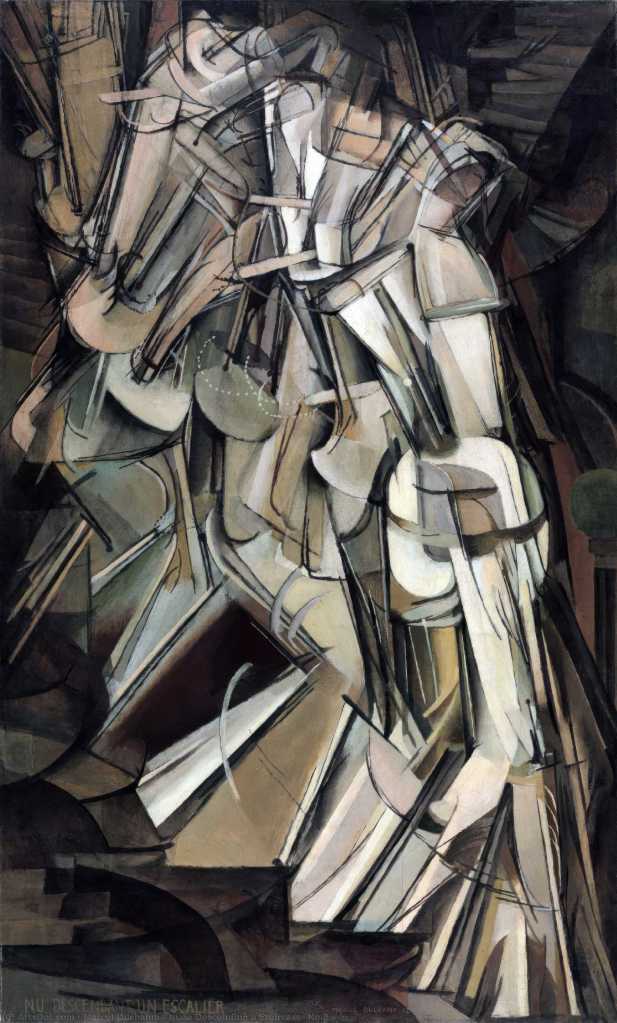
Nude Descending a Staircase, No.2 – by Marcel Duchamp, 1912, oil on canvas

I chose the painting above by Marcel Duchamp, which depicts a figure descending a staircase through time, rendered according to modern Cubist principles, with multiple replicas of the same figure in motion. Painted and exhibited in 1912, this style was innovative and drew significant media attention at the time. While I am not particularly drawn to the philosophy behind the painting, I see it as a symbolic representation of the theme of this essay. I believe that certain visual cues in the mind can serve as powerful guides, helping one remain focused when applying long-term effort and discipline.

Continue reading
Exploring the Possibility of Telepathic Communication

“… The ether is a great cosmic mass of eternal forces of vibration. It is made up of both destructive vibrations and constructive vibrations. It carries, at all times, vibrations of fear, poverty, disease, failure, misery; and vibrations of prosperity, health, success, and happiness, just as surely as it carries the sound of hundreds of orchestrations of music, and hundreds of human voices, all of which maintain their own individuality, and means of identification, through the medium of radio. …”

Think and Grow Rich, Napoleon Hill pg.44

Guglielmo Marconi with an early version of his radio invention, photo taken around 1890

When first proposed the idea of transmitting messages through invisible radio waves, Guglielmo Marconi’s contemporaries dismissed him as delusional. Unable to imagine that voices and signals could travel through the air without wires, some even went so far as to place him under psychiatric supervision. Yet Marconi persevered, conducting experiments on rooftops and across open fields, gradually proving that his invention could span great distances. His breakthroughs not only revolutionized communication but also laid the groundwork for innovations that would reshape warfare, commerce, and everyday life. Today, radio communication is a cornerstone of modern life, from emergency services to global broadcasting, from navigation systems to the invisible networks that connect our smartphones1. The discovery and use of radio waves stands as a powerful reminder that what once seemed like fantasy can, through vision and persistence, become foundational technology—and that progress often begins at the edge of disbelief.

This paper’s premise: could telepathy—communication with others through the power of thought—be another frontier awaiting discovery? A mystery embedded within the ether, not transmitted through radio devices, but instead through our minds?

Continue reading

The Eye is The Lantern of The Soul

22 “The eye is the lamp of the body. If your eyes are healthy,[a] your whole body will be full of light. 23 But if your eyes are unhealthy,[b] your whole body will be full of darkness. If then the light within you is darkness, how great is that darkness!1

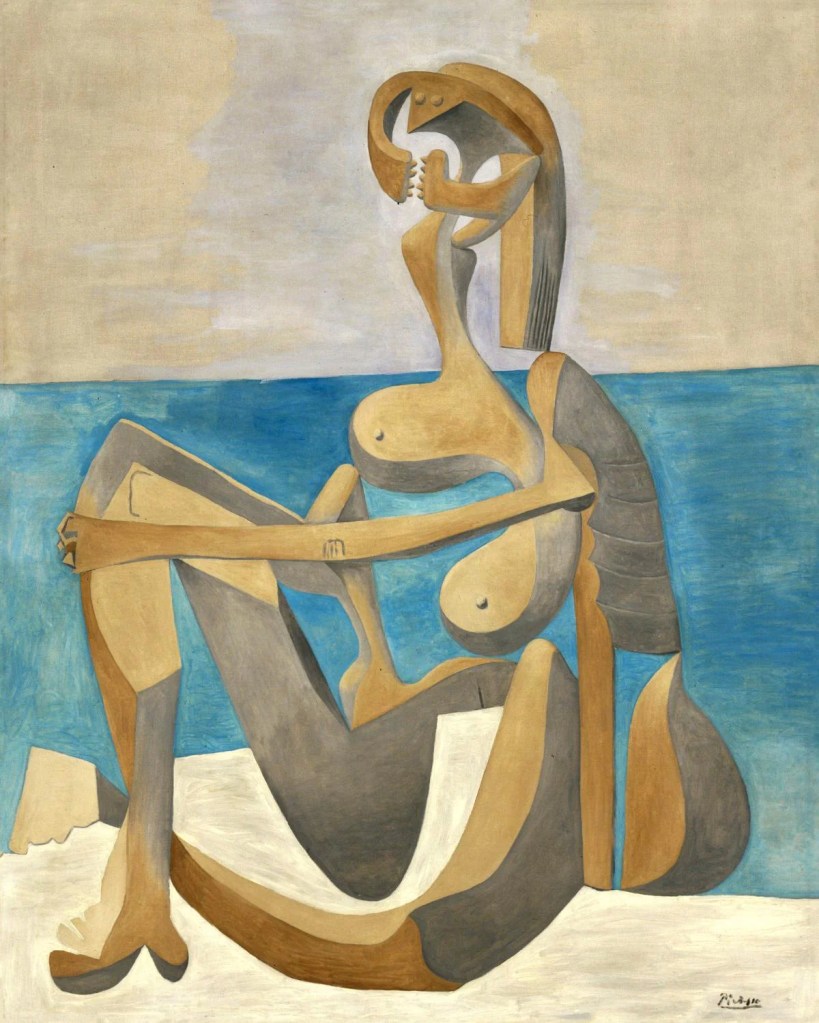
The eye, a window through which our inner selves connect with the external world. When we observe our surroundings—whether objects, nature, or other people—we are not merely analyzing or contemplating. We are also, perhaps unconsciously, projecting our inner state, our spiritual essence, onto the world (people) around us.

This projection is especially pronounced in social interactions. When someone is experiencing emotional turmoil or sadness, often times they ascribe their internal struggles to those around them. This tendency to fabricate a link with inner conflict can even result in the unjust attribution of one’s own misdeeds on to others. It becomes a coping mechanism for deflecting or processing the internal state, often to the detriment of those they project upon, in most cases, loved ones.


Image 1: Seated Bather by Pablo Picasso,
Paris, Early 1930s, Oil on canvas
Continue reading

The Consciousness of The Body

This past week, I noticed something strange in my left eye—a faint, dark spot hovering just off-center whenever I focused. It was especially distracting while reading; the spot would follow each eye movement with a short lag, almost like a fly, demanding my attention. Yet when I tried to look directly at it, it would disappear.

After researching the symptoms, I concluded it was a floater—a tiny clump of collagen within the vitreous humor, the gel-like substance that fills the eye. These floaters cast shadows on the retina, which our brain interprets as floating specks or shadows. What puzzled me was that it remained fixed in the same area of my visual field for weeks, unlike the usual fleeting ones I’d occasionally noticed before.

Eventually, I visited an ophthalmologist, who confirmed my suspicions. After retinal imaging and several tests, he explained that while the floater might never fully go away, over time my brain would likely begin to ignore it. He described a kind of perceptual adaptation, where the brain—specifically the visual cortex—learns to filter out persistent, unchanging stimuli.

This explanation struck me as deeply fascinating. How could the brain decide to suppress information that is technically still there? The floater itself doesn’t dissolve. Instead, the brain deems it unimportant and simply stops prioritizing it for conscious perception. And indeed, after a few more weeks, I began to notice it less and less. It was still there in my eye’s vitreous gel, but my brain had begun to tune it out.

This process points to the quiet intelligence embedded in our biology—an intelligence that operates without our awareness. It’s easy to associate intelligence only with our thinking mind, but our bodies are constantly making decisions behind the scenes.

This same intelligence often reveals itself in how our bodies handle emotional stress. I’ve trained myself to manage difficult thoughts—to mentally set aside distressing emotions when necessary. But the body has its own way of responding. Even when the mind seems unaffected, the body can express what we’ve suppressed: a racing heart, a stomach ache, skin reactions, or fatigue. These are not random—they’re signals that something is being processed at a deeper level.

Both experiences—the disappearing floater and the physical signs of emotional distress—showcase the body’s integrated intelligence. We are not simply minds that command passive bodies. Rather, our physiology engages in ongoing, active dialogue with our experiences, both sensory and emotional. Sometimes, it decides what we no longer need to see. Other times, it insists we pay attention to something we’ve tried to ignore.

What we call “body” and what we call “mind” are part of a seamless system—working together, adapting, and protecting us in ways we rarely appreciate. This quiet, subconscious intelligence may not speak in words, but it’s always listening. And sometimes (actually, most of the time, but definitely not always), it knows what’s best for us.

Spanish Court Paintings by Velázquez

Diego Velázquez’s renditions of various figures in the Spanish court of Philip IV capture moments of melancholic wisdom,—an awareness of the inner working of the Spanish court at the time, due to their unrestricted access to all parts of it—yet these people were never taken seriously, perhaps due to their diminutive physical appearances. However, Velazques has painted them under a deeper light. Unfortunately, artists are often succumbed to tailoring their works to the preferences of their patrons, who are typically more interested in paintings that align with the prevailing trends of the time, leaving no chance to the artist for exploring his intellectual subconsciousness through paid commissions. As a result, thinkers—who often possess a profound intellectual and creative sensibility—can find themselves constrained by such demands, deeply yearning to break free and create something more authentic, something that truly reflects the deeper essence of their time and place, worthy of being eternalized. This is precisely what Velázquez achieved in his depictions of dwarves and buffoons in the Spanish court. He moved beyond mere representation, capturing the essence of these individuals and revealing the authentic depth of their beings.

Image 1: Portrait of Francisco Lezcano, between circa 1635 and circa 1645 by Diego Velázquez

In The Portrait of Francisco Lezcano (above), Velázquez captures a moment, depicting the dwarf in a state of anticipation and restlessness. He holds his cards tightly, his grip fervent yet uncertain, as he glances toward the court*, awaiting confirmation to begin his performance. His posture is particularly carefully crafted by the painter—one foot positioned upright—emphasizing his small stature while also conveying a sense of readiness with one foot on the ground. Velázquez masterfully highlights Lezcano’s distinctive form, rendering it with his almost childlike, innocent expression. There is a psychological depth to the portrayal—Lezcano seems not to be quite happy, yet there is a sense of resigned dedication to his role. His demeanor suggests the emotional weight of his position in court life, caught between his duty and personal sentiment, which most likely is a complex mix of disdain and enthusiasm. Additionally, the background deserves attention. The wintry mountains and serene landscape behind him form its own distinct world, while not distracting from the subject to its carefully devised color palate and pictorial composition.1

Continue reading

On The Necessary Steps for The Revival of Civic Art

A city reflects the collective mindset of its residents. Its structure and condition mirrors the internal values and priorities of the people who occupy it. Consequently, the quality and state of the general organization of its urban fabric—such as pedestrian walkways, bicycle lanes, parking configurations, and green spaces—mirror the collective consciousness of the populace.

It is tempting to attribute the disorganization and urban problems of a town solely to the executive leader in charge, such as the mayor or governor. While these figures play significant roles, in democratic systems, they are not permanent appointments; they are replaced or re-elected over time. Leaving their offices to new faces and, thus, new policies. Democracy, by definition, places the power in the hands of the people, meaning that those who are in charge and shape the cities—the executives and legislators—are themselves products of the citizenry. Cities, therefore, are reflections of the collective understandings, priorities, and values of the population.

Since civic art is a multigenerational art form that takes a long time to complete, even if a visionary and highly capable executive were to implement sweeping reforms to reorganize a city with remarkable foresight during his tenure, the continuity and completion of his efforts would ultimately depend on those who succeed him. And without a well-educated and civic-minded populace, the next nomination would go to a leader with no understanding and appreciation for his predecessor’s works; therefore, his work would be rendered incomplete, and the cycle of urban dysfunction would inevitably repeat itself.

Philip IV in Armour, c, 1628. Oil on canvas, Madrid, Museo del Prado. By Velazquez1

On a separate note: The British historian, Colin Rowe, advocated for urban harmony achieved through a collage-like integration of architectural elements from various historical periods. He believed that juxtaposing structures from eras such as monarchical times, ancient Rome, and modern democracies creates a richly layered urban fabric. This approach, detailed in his work “Collage City,” emphasizes the value of diverse historical contributions coexisting within the urban environment.2

Continue reading

Lunar Influence on Human Physiology and Psychology

Observation:

For the past 12 months, I have maintained an unwaveringly consistent diet. The same type of breakfast and afternoon meals, eating twice daily, occasionally supplemented with late-night snacks of assorted nuts and dried fruits. My dietary regimen serves two purposes: first, to maintain my fitness endeavors by ensuring a stable calorie and protein intake, and second, to manage a long-standing health condition of mine. I have suffered from a specific type of disease related to digestion and the vascular structure of the body since the age of 15, and as I age, the pain I experience seems to compound over time. It is a mechanical problem. To mitigate this, I prioritize on dietary fiber to support optimal digestive health and maintain a stable routine of daily exercise to keep my vascular and digestive health at acceptable levels. Despite my disciplined approach—consistent meals, ample hydration, and balanced nutrition—I’ve noticed that these health issues of mine recur unpredictably, regardless of external factors like climate and humidity, which I once suspected to be the cause. After a year long process of closely monitoring my symptoms, I noticed a striking pattern: for some reason, these problems predominantly occur during full moon periods and, to a lesser extent, during new moons, but almost never during a quarter moon phase. I could be idle laying on the couch for an extended period of time, eating pizza after pizza and lasagna on those days without any problems at all.

Image 1: Quarter Moon phase, my favorite

Question:

This mind boggling self-discovery has left me searching for explanations. Is this a coincidence? Why am I having these problems always on days that are close to the full moon phase or on that specific day?

Hypothesis:

It is well-established that during a full moon, the Moon exerts an enhanced gravitational pull, influencing Earth’s tides due to its alignment with the Sun along a shared axis. If we think for a second, if this force can move vast bodies of water, it stands to reason that it might also affect the liquid fluids and the structure which circulate it within living organisms as well, particularly humans, whose bodies are composed of approximately 60% water. I suspect that the change in the Moon’s gravitational force influences the structure of my vascular system, contributing to the recurring health issues I experience during these lunar phases.*

Continue reading

Consciousness and Time

The fleeting nature of time serves as an adversary for nearly all living beings. In the wild, a grazing rabbit cannot linger too long without risking becoming prey. Similarly, a predator in the wild must act swiftly; hesitation allows its quarry to take sudden notice and escape. The passage of time establishes a natural sense of urgency in most living beings, forcing animals to be in a perpetual race to act quickly and efficiently for survival.* And, over the long term, time manifests a more sinister property of gradually pushing life into decay—bodies eventually weaken, and, unfortunately, life diminishes. In this context, one might assert that time inherently carries the essence of a silent adversary for all living beings over the long term. However, as human beings, somewhere along the line in the depths of our past, our hunter and gatherer ancestors have redefined their relationship with time by developing consciousness and the ability to contemplate on the future with the understanding of the nature of time. Through the development of our conscious faculties, we have somehow transformed time from a full adversary into a partial ally when needed. We are the only living beings on Earth capable of harnessing the passage of time to our advantage when we want to. Humans possess the unique ability to sit, reflect, and strategize, using time as a tool to solve problems. Our capacity for imagination and the willingness to learn through trial and error enabled us to approach challenges with patience and foresight, transforming the passage of time into a powerful resource for survival, growth, and advancement when needed.

Image 1: Diego Velázquez, The Waterseller of Seville, 1618-22, oil on canvas, 105 x 80 cm (Apsley House, London, England)
Continue reading

Imagination: The Laboratory of Existence

Imagination is not separate from reality; rather, it is an integral part of it—a private reality that is intricately woven into the fabric of existence. Much like a laboratory, where experiments are conducted to uncover truths about the physical world, imagination is where we test and refine ideas, crafting them before they manifest in the external world. The thin bone barrier of the skull is all that separates this mental laboratory from our broader reality. And yet, what transpires within this private space frequently influences our external world, just as external experiences shape our imagination in return. Therefore, the degree of mastery we exhibit in navigating the physical world is intrinsically tied to our ability to command and cultivate our inner faculties—the private realm of thought and reflection.*

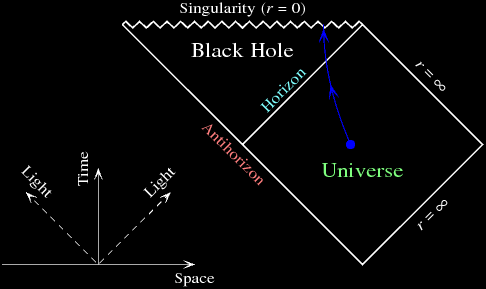
Consider the concept of black holes: their existence was not initially confirmed through the lens of a telescope but was instead conceived through the power of human imagination and the rigor of mathematical reasoning. The idea of a black hole emerged from the search for elegance and beauty within the mathematical equations of Einstein’s theory of general relativity. These celestial objects, with singularities at their core and event horizons at their external boundaries, remained purely theoretical until empirical evidence confirmed their reality. The inception of the concept took place in the imagination and its manifestation in space was later proven as technologies advanced. Similarly, Einstein’s theories of special and general relativity originated from intricate thought experiments long before their validation in the physical world.1 These examples underscore how imagination, especially when guided by reason and creativity, is a cornerstone of human progress and must therefore be recognized and nurtured as such in our largely obsolete educational systems.

“… this incredible fact that a discovery motivated by a search after the beautiful in mathematics should find its exact replica in Nature, persuades me to say that beauty is that to which the human mind responds at its deepest and most profound… “2

Scientists and astrophysicists are currently deeply engaged in exploring the imaginative capacities of their minds to unravel the mysteries of black holes. The singularity at the center of a black hole remains one of the most enigmatic phenomena in modern physics, with theories and hypotheses continuously being developed. One such theory, formulated by Roger Penrose, is represented in the diagram below. The Penrose diagram seeks to conceptualize the fabric of space-time in relation to a black hole. It addresses key questions: What occurs when an object crosses the event horizon? What lies within the horizon, where not even light can escape from, and which we are unable to observe through with the current technologies? At present, much of our understanding relies on the power of human imagination, and it is via this intellectual faculty that we may uncover a solution to the black hole puzzle in the near future.3

Image 1: Penrose Diagram of a Black hole.
Continue reading

On the Paradox of Failure

Today’s self-development philosophies often encourage us to emulate people who are successful on the surface: those who are achieving, advancing, and seemingly on the “right” path in life. The advice is simple: listen to the successful, and avoid taking counsel from those who have failed in their business ventures or faced financial ruin due to wrong choices. However, I disagree. In reality, some of the most profound wisdom is often derived from those who have faced failure or adversity for long durations. These individuals have had the opportunity to reflect on their setbacks, examining the underlying causes and potential solutions they would employ if given the chance to rewind time. On the other hand, successful individuals—particularly those with innate talent—often achieve success without engaging in deep reflection about their journey. Usually, people tend to analyze their past actions with more scrutiny when the outcome was unfavorable. When success comes easily, the reasons behind it can also be as easily overlooked. However, when success is the result of perseverance and hard work during times of apparent failure, one gains a clear understanding of the incremental steps that lead to achievement.

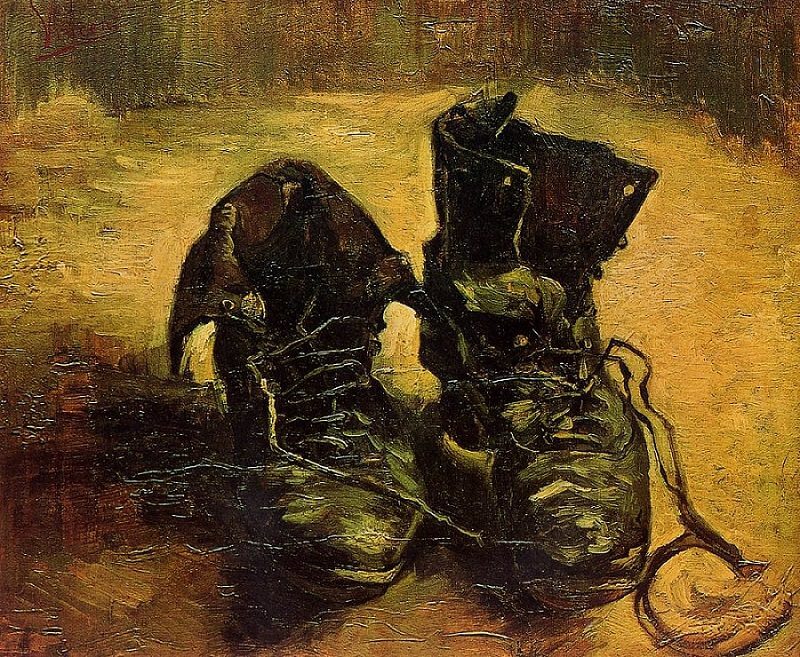
During Vincent van Gogh’s time, most artists were preoccupied with creating idyllic natural landscapes, characterized by cheerful and harmonious compositions. Van Gogh, however, driven perhaps in part by his complex psychological state, gravitated toward capturing a grittier, more visceral essence of nature—raw, unrefined, and often less commercially appealing, as exemplified in his painting below of a pair of shoes. Vincent’s work was largely unappreciated during his lifetime. His brother Theo, who tirelessly supported him, struggled to sell his paintings due to their unconventional style and melancholy. Within his family, Vincent was often regarded as a failure, a perception that weighed heavily on his mind and fueled his relentless quest for purpose and recognition. Today, his paintings are celebrated worldwide, not only for their groundbreaking technique and emotional depth but also for the profound impact on the trajectory of modern art. What was once deemed unmarketable now holds immense cultural and monetary value, a testament to the timeless resonance of Van Gogh’s vision.1

Image 1: A Pair of Shoes, 1886 by Vincent Van Gogh

Success, by its very nature, is built on the foundation of repeated failures. A person may fail once, twice, or even nine times before finally succeeding on their tenth attempt. But what if the individual we regard as a “failure” is currently on his ninth attempt? Should his insights acquired from the past 8 attempts be disregarded entirely? I argue not. These individuals, though marked by their missteps, may possess valuable perspectives that can inform our own journeys. This is precisely why I struggle to accept society (or the free market) as the ultimate authority in determining who deserves to be celebrated as successful and who is dismissed as a failure. Society, after all, once dismissed a struggling artist like Vincent van Gogh as a failure. Perhaps if Vincent had lived longer and not succumbed to despair, he might have achieved a breakthrough in his lifetime as well, creating a work so profound it would have swayed even the most skeptical art connoisseurs of his generation. Tragically, he simply ran out of time, leaving the remnants of his genius to be recognized only posthumously.

Van Gogh’s case underscores the importance of establishing a correct mindset and building a strong sense of self-worth and unwavering belief in one’s own talents. The path to greatness is rarely straightforward, and more often than not, it is fraught with doubt, resistance, and discouragement—even from those closest to us. It’s a peculiar mystery of life: why do we, as a society, so often discourage our peers from succeeding? Is it envy, fear of change, or simply an inability to recognize potential when it doesn’t conform to familiar norms? I don’t have the answers, but it’s a poignant reminder of the resilience required to pursue one’s vision in the face of widespread discouraging doubt.

Continue reading