There is a vast range of electromagnetic wave frequencies dissipating aimlessly throughout the cosmos, including those that are not perceptible to us, transmitting energy across the frictionless vacuum of emptiness, space. Unpolarized waves emitted from the Sun, for instance, makes its way to Earth as visible light and thermal energy. The blue wave frequencies in the visible spectrum emitted from the Sun are most prone to scattering when they interact with atoms in the atmosphere due to their shorter wavelength*, hence the blue sky during the day1. Yet, our senses are limited. The human eye can perceive only a narrow portion of the electromagnetic spectrum, leaving us blind to microwaves, radio waves, alpha and gamma rays, and countless other forms of radiation. (Image 1)
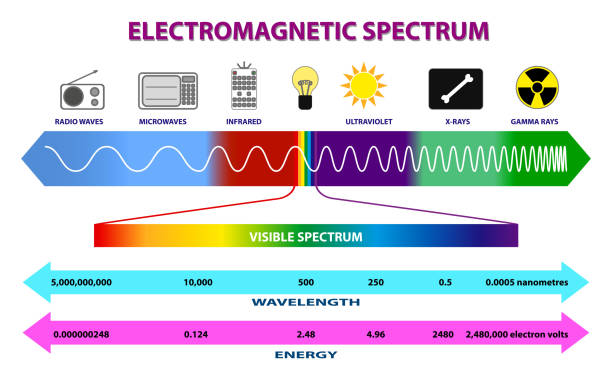
Human sensory modalities—vision, audition, tactile perception, and olfaction—while robust, are inherently limited in their ability to fully grasp the complexities and phenomena of nature. Despite these innate limitations, astrophysicists attempt to bypass the constraints of our senses by seeking to unlock the mysteries of the universe through creativity based hypotheses and imaginative theories. They rely not solely on our biological God given senses, but rather, also, on our capabilities of imagination and formulation, which are rooted in the complex cognitive processes unique to humans, as far as we know today, though I must say Orca’s happen to be a commandable competitor to us with their advanced cognitive abilities**. This aspect of our nature is closely linked to the planning spirit discussed in my previous essay.2 Both, advanced endeavours of the self-conscious mind, which, fortunately, widens the gap between beast and man.
Continue reading
 Şahin Kaya Arıkoğlu