For an extended period of time, I thought that the dysfunctionality in the Middle East’s traffic stemmed from inadequate urban and infrastructural planning. I used to think that the poorly dimensioned roundabouts, abrupt lane merges, deficient road dimensions, a lack of pedestrian and bicycle paths and the absence of planned parallel parking spaces were the primary—if not, the sole cause of—the unpleasant traffic conditions, where one often feels incensed by the near-anarchic behavior exhibited by drivers on the roads. I would avoid driving in such conditions at all costs, even if it meant that I had to wait longer than 3 days to get a nail clipper delivered to me via an ecommerce site as opposed to taking a convenient ride to the nearest supermarket just a few blocks away. Through time, living here, driving has become an activity I undertake only when absolutely necessary and when no alternative means are available for accomplishing my tasks.
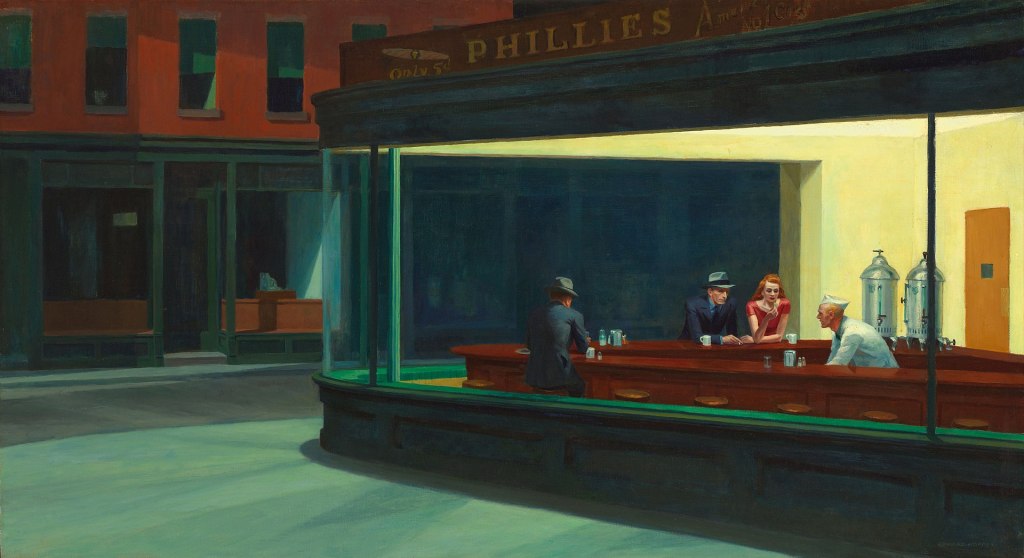
Indeed, urban life often brings with it a sense of isolation and congestion. In the West, many citizens are keenly aware of the daily hardships that come with commuting. However, having lived on both sides of the Atlantic, I must acknowledge that the scale and severity of traffic-related issues in the East are truly unprecedented. What is even more concerning is that these problems continue to worsen over time, largely because their underlying causes remain unaddressed. Without a concerted effort to tackle these systemic issues, the situation will only deteriorate further, exacerbating the strain on individuals and the city as a whole.1
Two years ago I started work on an adaptive re-use project in Laichingen, Germany, where I had the opportunity to analyze the cultural fabric during my periodic visits. In Germany—a country with a significant Middle Eastern population, where many working-class Middle eastern men immigrated in the late 1960s, with third-generation Middle Easterners now living there—I began to notice something: Despite the superbly planned, pristine roads in Germany, for some reason, it happens to be my middle eastern compatriots who are often responsible for the traffic violations bordering reckless driving as I observed there. Even in the more utopically planned autobahns of Germany, I couldn’t help but notice that the few negative driving traits which I have seen, such as impatience and disrespect, were all executed by the drivers with Middle Eastern traits.
This led me to contemplate a more delicate question: Is this a deeper, cultural issue? Are we, as Middle Easterners, somehow unable to adopt peaceful driving habits?* I started thinking about the Native Americans, who didn’t have horses before the arrival of Europeans but later started using them along with other Western technologies (and, as we know, western diseases). It made me wonder: How would things have been like if Middle Eastern people had never encountered Western technologies, such as an automobile? How would our transportation systems have evolved independently without technology transfer? Would we have invented something akin to the automobile centuries later, or, perhaps in the absence of such a machine, developed entirely different modes of transportation with less cultural maladjustments?
The automobile—the four-wheeled capsule that takes us from point A to point B—appears to be more than just a mode of transport in the Middle East. It seems to be a means of asserting dominance over others. Though the prices of vehicles here have been tripled in cost due to unreasonable taxes, people seem to get in ques and wait lists to buy them, just to be able to climb the ladder an inch further in the dominance hierarchy. At the roads, there is this unspoken power hierarchy in traffic, where the most expensive vehicle is on the top of the pyramid, and, unfortunately, the pedestrian at its base, with the least amount of consideration it receives. The concept that vehicular roads are designated zones for motor vehicles, and that cars should not invade pedestrian pathways, seems to be a difficult and foreign concept to grasp. In contrast, in Western traffic systems, pedestrians are often regarded as the priority within the transportation hierarchy, with motorists required to yield to them. Should this rule be violated, the judicial system enforces a robust framework of fines and penalties, effectively deterring any attempt by motor vehicle operators to undermine the pedestrian’s long established primacy in the traffic order. This legal structure underscores the commitment to safeguarding pedestrian rights and maintaining a balanced, equitable flow of movement.
One could argue that the lack of law enforcement significantly contributes to this cultural disconnect with automobiles, but I’m increasingly inclined to believe that the technology itself feels foreign to our DNA. It wasn’t organically developed through the regional industries of the Middle East. Instead, it was imported from foreign sources, and perhaps this foreign technology doesn’t quite fully align with our peculiar customs and culture, leading to its distorted adaptation as seen in the chaotic and often unpleasant traffic experiences in the Middle East today.2
* Just as a body cannot function effectively when its arteries are clogged with its compromised access to essential resources devoid of proper circulation, so too, a nation state’s transportation system requires efficient flow to sustain its well-being. When traffic becomes disrupted by aggressive drivers and congestion sets in, it is only a matter of time before critical intervention becomes necessary, in the form re-structuring and re-planning. Peaceful, orderly driving practices—akin to clear arteries—are essential for maintaining the smooth operation of a nation’s infrastructure, fostering the collective prosperity and functioning of the state.
Footnotes:
1) For further reading on the art of building cities, I would like to suggest the book: Design of Cities by Edmund N. Bacon.
2) Please watch the following video depicting a person entering a hospitol riding a motorbike, totaly clueless of it being prohibitited. The youtube link: https://www.youtube.com/shorts/7TBh-cGjiN8
Image Credits:
1) Nighthawks by Edward Hopper. Courtesy of the Art Institute Chicago, https://www.artic.edu/artworks/111628/nighthawks
 Şahin Kaya Arıkoğlu