Gravity is the fundamental force that orchestrates the interaction of masses, drawing objects toward one another and providing the structural cohesion necessary for the universe. It governs the motion and balance of planets, stars, and galaxies, anchoring the cosmos in a delicate dance. Omnipresent and omnipotent on Earth, gravity extends across the universe with an ever-changing intensity that depends on position within the fabric of spacetime in relationship to planets, stars and other objects of non-negligible mass. As the unseen architect of motion and form, gravity shapes everything from the smallest particle in quantum mechanics to the largest celestial bodies in space such as Sagittarius A*, molding the universe and guiding the evolution of stars, galaxies, and life itself through time. Its influence reaches into every corner of existence, defining our physical world and the very essence of our reality.
F = (G * m1 * m2) / d^21
Imagine our bodies in the vacuum of space away from the influence of any significant gravity exerting mass, where no gravitational forces act upon us, as, perhaps, abroad the International Space Station. After living for years without gravity in this capsule devoid of gravity, how might one feel when experiencing it once again after a long break upon the return to Earth?2 Studies on astronauts reveal the physical adaptation time needed when returning to Earth’s gravity, yet our bodies are conditioned to it from birth, even from the moment of conception. This constant pull is so ingrained in our day-to-day life experiences that we hardly even notice it, though it shapes our every movement, and it is, indeed, a significant force. Have you ever heard anyone lament about the relentless pull of gravity during a long walk or while sitting for hours in a chair? Though we rarely think about it, gravity constantly exerts its force on us, shaping our movements and experiences in ways we often take for granted. It’s so fundamental, so woven into the fabric of our lives, that we accept it as a given – an invisible force that defines our reality without question.
How an astronaut re-experiences gravity parallels to how one adapts to new constructive habits in life. Once one incorporates new daily routines, like physical exercise or work on a certain project or goal (Reading and writing may be good examples as well), these daily actions in a given time interval gradually cease to feel burdensome and become a natural way of life, similar to how we experience gravity. We get used to it, the mind and body adepts. The hardest part of building any habit lies in the initial discomfort—pushing out of the comfort zone. Much like an astronaut re-acclimating to Earth’s gravitational pull, the true challenge lies in the adaptation period. Adjusting to natural gravitational forces requires both resilience and patience, as the body and mind recalibrate to the familiar yet demanding conditions. However, once established, the habit becomes the new comfort zone, much like gravity on Earth for us. We will, then, barely feel its discomfort since we will be so accustomed to it.
The next obvious question, then, becomes: how can we motivate our reluctant, energy-conserving selves to embrace the discomfort of adapting to a new habit? How can we cultivate the resilience to face this initial phase in order to not allow our minds and bodies to stagnate by constantly progressing? The answer is straightforward, though not particularly sophisticated: simply, by tricking ourselves*. We begin by committing to only a brief initiation, but once we have crossed that threshold of inner resistance3, we, then, find the momentum to carry us forward into the full establishment of a new constructive and healthy habit. It is the habits, rather than the results, that define a virtuous individual. For, the outcomes may also be attained through mere luck, but such chance alone ought not to constitute virtue. Individual excellence lies in the consistency of one’s actions and choices, not in the randomness of results.4
* Here, I am referring to what can be called the “lower self”—the part of us that seeks immediate gratification, the one that desires nothing more than to sit idly in front of the TV, indulging in hours of Netflix, with no regard for the responsibilities or aspirations of tomorrow.
Footnotes:
- Newton’s law of gravitation formula with its variables: mass and distance. The size of mass is proportional with the intensity of the force and the distance inversely proportional with it.
- Please watch the video in the following link to have a glimpse of what NASA Astronaut Scott Kelly experienced after a year abroad in the International Space Station: https://www.youtube.com/watch?v=LIgMXGAGTgM
- Please read my previous essay, where I make a reference to a book which attempts to explain the power and antidote to inner resistance: On The Meaning of Failure: Insights from Planetary Evolution https://sahinarikoglu.com/2024/11/11/on-the-meaning-of-failure-insights-from-planetary-evolution/
- For a thorough understanding of proper education, I would strongly recommend examining how John Adams, the second President of the United States, nurtured his intellectual development through his education. And also, how his and Abigail Adams’ letters to their son, John Quincy Adams on virtue and proper education, influenced their son’s intellectual development. The books John Adams mentions in his letters is especially noteworthy. A notable work that chronicles the life of the second President is John Adams by David McCullough.
Image Credits:
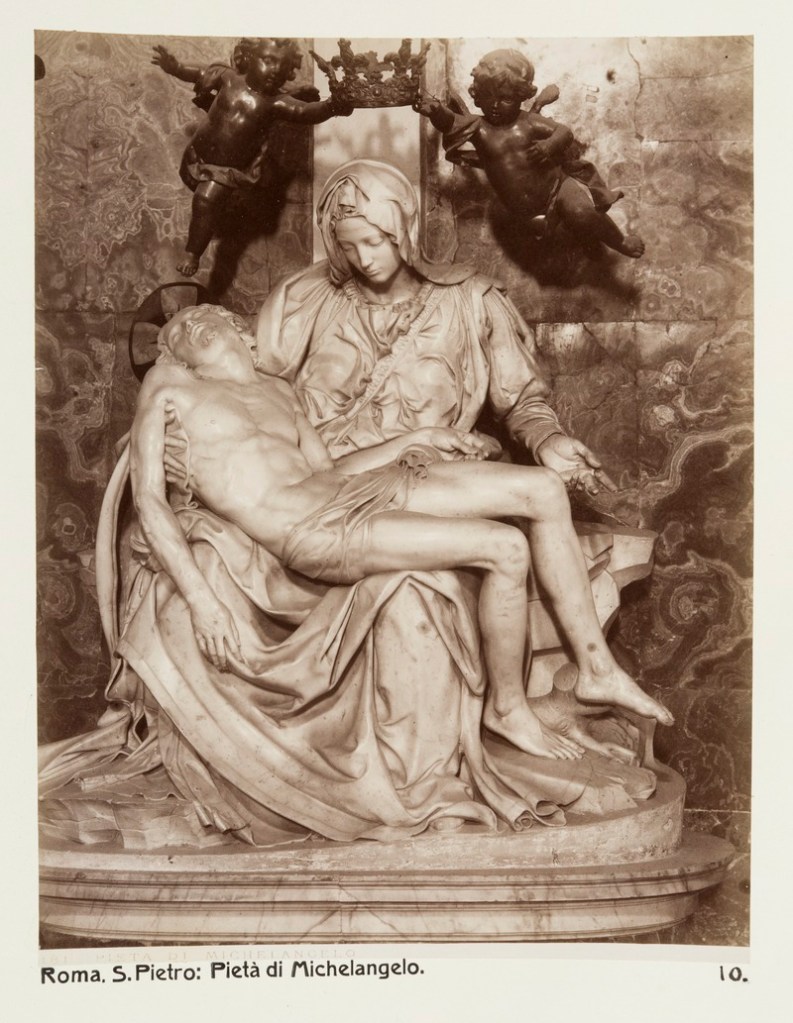
Image 1: Photograph courtesy of Jenny Bergensten. Link to image: https://en.wikipedia.org/wiki/Piet%C3%A0_%28Michelangelo%29#/media/File:Piet%C3%A0_-_Hallwylska_museet_-_107520.tif
 Şahin Kaya Arıkoğlu