Observation:
For the past 12 months, I have maintained an unwaveringly consistent diet. The same type of breakfast and afternoon meals, eating twice daily, occasionally supplemented with late-night snacks of assorted nuts and dried fruits. My dietary regimen serves two purposes: first, to maintain my fitness endeavors by ensuring a stable calorie and protein intake, and second, to manage a long-standing health condition of mine. I have suffered from a specific type of disease related to digestion and the vascular structure of the body since the age of 15, and as I age, the pain I experience seems to compound over time. It is a mechanical problem. To mitigate this, I prioritize on dietary fiber to support optimal digestive health and maintain a stable routine of daily exercise to keep my vascular and digestive health at acceptable levels. Despite my disciplined approach—consistent meals, ample hydration, and balanced nutrition—I’ve noticed that these health issues of mine recur unpredictably, regardless of external factors like climate and humidity, which I once suspected to be the cause. After a year long process of closely monitoring my symptoms, I noticed a striking pattern: for some reason, these problems predominantly occur during full moon periods and, to a lesser extent, during new moons, but almost never during a quarter moon phase. I could be idle laying on the couch for an extended period of time, eating pizza after pizza and lasagna on those days without any problems at all.

Question:
This mind boggling self-discovery has left me searching for explanations. Is this a coincidence? Why am I having these problems always on days that are close to the full moon phase or on that specific day?
Hypothesis:
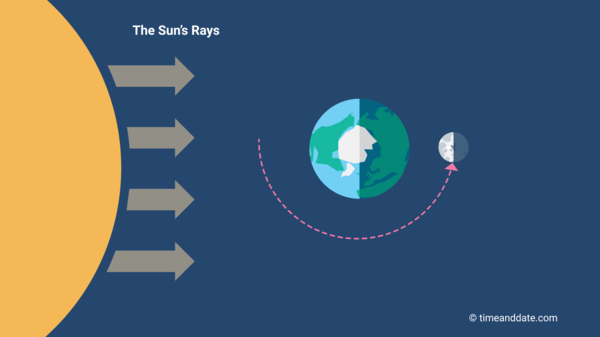
It is well-established that during a full moon, the Moon exerts an enhanced gravitational pull, influencing Earth’s tides due to its alignment with the Sun along a shared axis. If we think for a second, if this force can move vast bodies of water, it stands to reason that it might also affect the liquid fluids and the structure which circulate it within living organisms as well, particularly humans, whose bodies are composed of approximately 60% water. I suspect that the change in the Moon’s gravitational force influences the structure of my vascular system, contributing to the recurring health issues I experience during these lunar phases.*
Beyond the physical realm, I have also observed psychological effects during these periods. Full moons appear to intensify emotional imbalances and irritability in those around me, including family members. There is an intangible yet palpable sense of unease, almost as if emotions become unmoored. I can see it in peoples eyes when I look carefully on such days, and especially evenings. While this remains anecdotal, it aligns with centuries of cultural and historical beliefs attributing behavioral changes to lunar cycles.†
Conclusion:
Science, as we know it, is largely incomplete. Similar to our continuously evolving understanding of black holes and other cosmic phenomena, much of our knowledge regarding the cosmic effects on living beings remains grounded in speculative research.1 The full scope and impact of interactions between celestial forces remain largely uncharted and not yet fully comprehended. Our lives are shaped mainly by cycles‡—the Earth’s rotation defines a day, its revolution around the Sun defines a year, and the Moon’s phases influences the Earth’s tidal movements (as far as we know). How can we dismiss the possibility that lunar forces may also influence us on both a physiological and psychological level as well? If the changes in Moon’s gravitational pull can move oceans, is it not plausible that it also exerts an influence on living beings, whose composition is predominantly water? This is not a question of mysticism but one of curiosity and inquiry. The interconnectedness of the cosmos and life on Earth remains an area ripe for exploration, urging us to reconsider the limits of our scientific understanding.
The cycles of the universe are more than abstract concepts—they are forces that shape the rhythms of life. It is time we delve deeper into the profound, unseen connections between celestial phenomena and human existence.
*The change in gravitational force exerted by the Moon during a full moon phase is negligible and likely close to zero. However, even a minuscule influence could potentially affect the body’s equilibrium-based systems. Alternatively, if it is not the Moon’s gravitational force at play, it could be another, as yet unidentified, phenomenon—a kind of “lunar force,” perhaps—awaiting discovery.
†Fun fact: The word lunatic has its etymological roots in the Latin word lūnāticus, which means “moonstruck” or “of the moon” (lūna being Latin for “moon”).
‡When one considers it, much of life is governed by cycles: our sleep schedules, dictated by circadian rhythms of day and night; the profound impact of spring on living organisms; and the passage of years with its repetitive nature, shaping the process of aging—all rooted in cyclical patterns. Well, the moon also works with a cycle on its own, and guess what, it is revolving around our planet, which is home to us.
Footnotes:
1) Once again I would like to recommend reading the book: Black Holes: The Key to Understanding the Universe, by Brian Cox and Jeffrey R. Forshaw
Image Credits:
Image 1:https://earthsky.org/moon-phases/is-it-a-quarter-or-a-half-moon/
Image 2: https://www.timeanddate.com/astronomy/moon/full-moon.html
 Şahin Kaya Arıkoğlu