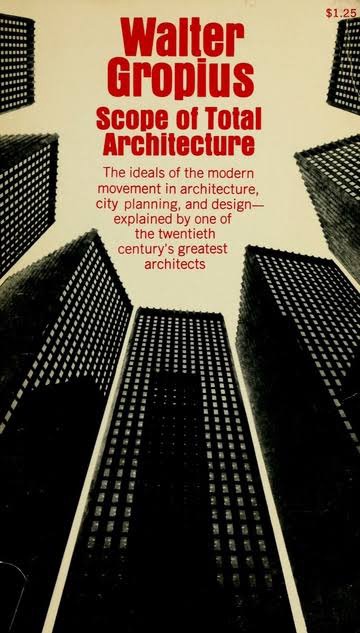
With its pragmatic architectural curriculum, as I was studying at the University of Maryland’s Architecture and Urban Design program (2006-2011), I have first heard about Walter Gropius and the Bauhaus movement from my mentors. Skimming through various picture books of Bauhaus products and buildings in the schools library, I ruled out using such precedents for my design projects due to its emphasis on the repetitive international/global style which I assumed it prioritized. However, as I read this book written by Gropius himself, to my surprise, my initial negative thoughts on the theoretical side of the Bauhaus formed during my studies were one by one proven wrong. It turns out that, Mr. Gropius, is in fact a region sensitive architect and writer who tends to be against an overarching omnipresent international style, and is, actually, quite displeased that his work had been interpreted by others as a international “style” in design.
After the Great war he took on to the daunting task of establishing the Bauhaus institution to engage context and circumstance appropriate meaning to the technological innovations in his field. His main aim being to utilize the apparently cold new industrial building technologies to serve a more humanist agenda through collaborative theoretical and craft/skill oriented design processes.
Continue reading Şahin Kaya Arıkoğlu