The Necessity of Subordinating Emotions in Decision-Making: Alexander Hamilton’s Fall

Amidst battling a cold and feeling physically drained, Commander-in-Chief John Adams, driven by a sense of duty, traveled from his hometown of Quincy to Trenton in 1799. There, he convened with his cabinet to deliberate on strategic options in the event of possible war with France.* At the time, American maritime trade was under constant threat from French warships at the Atlantic, provoked by the administration’s favorable stance toward Britain, a rival of revolutionary France. Adams believed in Peace Through Strength, thus he was interested in establishing a strong navy as a deterrent and a tool for leverage in future negotiations with France.

Previously, Adams’ envoys faced a degree of humiliation at the hands of the French Directory, where they were largely dismissed and treated as subordinates. However, with Napoleon Bonaparte’s ascension to power, the dynamics shifted, offering renewed hope for a better relationship between the U.S. and France.

The newly established United States faced the delicate challenge of navigating alliances among the dominant European powers. Alexander Hamilton and the Federalists favored policies that aligned with Britain, while Republicans, led by Thomas Jefferson, sought closer ties with revolutionary France. John Adams, burdened with the responsibility of his office, despite being aligned with the Federalist camp, displayed political mastery by treading carefully between these two competing interests, ensuring a balanced approach for the young nation with a focus in developing industries and the navy.1

Image 1: Alexander Hamilton by John Trumbull 1805

Alexander Hamilton, a prominent Federalist renowned for his eloquence and energy, fervently advocated for war with France, perceiving President Adams’ reluctance as a direct challenge to his Federalist principles. Convinced that a war was necessary, Hamilton had previously persuaded George Washington to support the formation of a resource consuming standing army, with Hamilton himself appointed as its commander. At the time, Hamilton’s ambition was well-known, and it was rumored that he suffered from a type of “Napoleon complex,” a notion reinforced by Abigail Adams, who mockingly referred to him as “Hamilton Bonaparte.” in one of her letters.2

Continue reading

Book Review: 12 Rules For Life, An Antidote to Chaos, by Jordan B. Peterson

First of all, in a way, this may sound as an odd comparison, but reading through this book, I found that Jordan Peterson’s writing style to bear a significant degree of resemblance to that of the renowned Russian author, Fyodor Dostoevsky. Both tend to employ a self-reflective, introspective dialogue in their works. However, unlike Dostoevsky’s often intricate and complex train of thought, Peterson’s approach is more direct and accessible, yet retains a similar depth of imagination.* A balance that I particularly appreciate. His 12 Rules for Life reads almost like a series of individual, self-contained mini-books, each of which could have been expanded further more in breadth if he had wanted. Peterson maintains a concise, focused narrative, ensuring that every sentence holds significance. In the final chapter, titled Coda, he skillfully ties together the preceding ideas, creating a structure that almost mirrors a well composed musical composition of the classics in my opinion.

Image 1: 12 Rules for Life by Jordan Peterson

It is particularly intriguing that Jordan Peterson simultaneously presents two seemingly contradictory worldviews on the subject of creation. On one hand, he references Darwinian principles, discussing how humans, like chimpanzees, are products of evolutionary processes. His extensive footnotes and bibliography, which include numerous works on research related to chimpanzees and other primates, clearly indicate his intent to draw distinct comparisons and analogies between human behavior and that of primates. This approach is particularly evident in his fifth chapter, where he discusses the importance of discipline and frequently references these studies to support his arguments. On the other hand, he advocates for the value of religious belief, particularly in God and Christianity, as beneficial, regardless of whether one perceives these beliefs as literal truths or metaphorical narratives. This juxtaposition raises compelling questions about the intersection of science and religion in understanding human existence. I appreciate this perspective, as the reality is that we do not yet fully know whether it is possible to dismiss religion as mere fiction or to regard science as a form of black magic. It is essential that we remain open to both possibilities, so as to avoid regretting a potential epiphany that our future selves might one day encounter. Frankly, I view Peterson’s ability to fully engage with two seemingly contradictory perspectives as a strong indicator of intellectual depth. By embracing both views with conviction and seeking to reconcile them within his own understanding, he demonstrates a commendable capacity for nuanced thought.

Continue reading

The Immune System’s Design

Is the human body the product of a series of random phases that culminated in its present form, or did it evolve through a guided journey, shaped by the intelligence of nature, adapting to conditions in ways that suggest an intricate, purposeful design spanning vast epochs of time?

Consider, for instance, the human immune system1, a marvel of evolutionary adaptation that responds to threats through its two main branches: the innate immune system and the adaptive immune system.

The innate immune system consists primarily of macrophages, neutrophils, and protein molecules within the complement system. These components are the body’s first line of defense, ready to attack intruders at any given time. However, unfortunately, certain pathogens possess extraordinary resistance, overpowering these frontline defenders, leaving them inadequate in battle. To address such challenges, the body relies on its second line of defense, the adaptive immune system, specifically B cells and T cells*.

Within this system, dendritic cells function as sentinels, collecting fragments of pathogens from the “battlefield” and transporting them to the lymph nodes, where antigens are presented to T and B cells, which possess billions of unique receptors—a vast repertoire that can theoretically match any pathogen existing on Earth, in the universe, or even one that may evolve in the future. A true library. The crucial step in defeating strong and complex pathogens is finding the T or B cell with the right protein receptor match. Once this match occurs, these cells replicate and flood the site of infection. Helper T cells amplify the response of macrophages in the battlefield, while B cells produce antibodies. Initially, the antibodies are weak, but once helper T cells signal the B cells to target a specific threat, the B cells transform into plasma cells, generating more potent antibodies. The encouraging helper T Cells here act almost like a two-step authentication system after the initial activation of the dendritic cell.

Image 1: The 2nd step of the two-step authentication processs. Part of the dance which takes place between the T and B Cells in order to further activate our adaptive immune system
Continue reading

The Gulag Archipelago: Inner Radar

The Gulag Archipelago1 offers a personal and introspective account of the soviet gulag system as Solzhenitsyn reflects not only on his own experiences but also on the broader ideological framework that underpinned Stalin’s Soviet regime. In his book, he describes the systemic cruelty of the soviet prison systems (Gulags), examining the role of the “blue caps” — the Soviet officers who administered the brutal labor camps and interrogated prisoners at their headquorters2 — and the broader philosophy (or lack of a real philosophy?) that shaped their actions. He points out how the corrupt nature of a social system can tempt even honorable individuals to conform to it, bringing out their worst sides. And if not succumbed to the system, then unmercifully exiled or, in most cases, imprisoned. He argues that when a corrupt idealism and philosophy drive evil acts, people are often drawn further into darkness. Solzhenitsyn’s work probes into the dehumanizing effects of this system, illuminating both its individual and collective dimensions. According to him, one of the primary factors enabling such pervasive evil by the blue caps was the level of compliance of ordinary Russian citizens, who, without any resistance, passively obeyed, leading to their eventual interrogation and transfer to the Gulags on a massive scale.*

One theme that particularly resonated with me was his discussion of the “inner radar.” Through his interactions with new prisoners and observations of camp dynamics, Solzhenitsyn describes a nearly instinctual ability to identify possible informants and those with possible malicious intents by analyzing certain visual cues and body language, an intuition he learned to trust through time, as this skill was crucial for navigating such an environment.

Image 1: Book cover of The Gulag Archipelago by Alexandr Solzhenitsyn
Continue reading

Adapting to New Habits: A Lesson From Gravity

Gravity is the fundamental force that orchestrates the interaction of masses, drawing objects toward one another and providing the structural cohesion necessary for the universe. It governs the motion and balance of planets, stars, and galaxies, anchoring the cosmos in a delicate dance. Omnipresent and omnipotent on Earth, gravity extends across the universe with an ever-changing intensity that depends on position within the fabric of spacetime in relationship to planets, stars and other objects of non-negligible mass. As the unseen architect of motion and form, gravity shapes everything from the smallest particle in quantum mechanics to the largest celestial bodies in space such as Sagittarius A*, molding the universe and guiding the evolution of stars, galaxies, and life itself through time. Its influence reaches into every corner of existence, defining our physical world and the very essence of our reality.

F = (G * m1 * m2) / d^21

Image 1: The Pietà by Michelangelo (1498-1499) is an exemplary choice for this essay due to its masterfully detailed marble sculpting. The delicate yet powerful poses of the figures convey an overwhelming sense of weight and sorrow, allowing the viewer to almost physically feel the emotional gravity embedded within the composition.
Continue reading

On The Meaning of Failure: Insights from Planetary Evolution

For some obscure reason, most people are generally inclined to hesitate on taking decisive actions toward their envisioned and just goals, often paralyzed in decision-making by the fear of failure, self-doubt and most commonly, inner resistance1.

Failure is an inherent prerequisite for success, a principle evident not only in the evolutionary trajectories of living organisms but also in the history of celestial bodies. In our everyday language, it may be time to reconsider the term ‘failure’ and replace it with a more inclusive and constructive word, as what is often perceived as failure is, in fact, an integral step in the journey toward success. Even when a particular step does not immediately appear to contribute to the progress of success, it may later be recontextualized to serve a different purpose. Thus, one could argue that there is no true waste in, so-called, failure; it simply requires a deeper examination to uncover its potential in retrospect.

Let’s consider a broader perspective for a moment—one that includes the formation and evolution of planets in our solar system. In our planetary system’s early days, Mars and Mercury (yes, most likely, Mercury as well despite its smaller mass*) may have resembled Earth, with oceans, water, and perhaps even thriving life.2 However, due to its smaller size, these planets couldn’t sustain favorable conditions, eventually transforming into the red and gray, barren planets we know today. A mistake of nature?

Image 1: Image of Mercury taken by Nasa’s Messenger, and later colored in with respect to topographical and mineral composition data.

In contrast, Earth continues to support a vast ecosystem of life, demonstrating that, in some instances, success aligns with specific conditions and perseverance. Mars, though no longer able to harbor favorable conditions as Earth does, still holds significant value in respect to the future, reminding us that what may appear as a failure might yet serve a purpose in ways we cannot yet fully predict. Today, visionary thinkers like Elon Musk are exploring the possibility of revitalizing Mars, aiming to use it as a new frontier for life beyond Earth.

Continue reading

The Problem of Traffic in the Middle East

For an extended period of time, I thought that the dysfunctionality in the Middle East’s traffic stemmed from inadequate urban and infrastructural planning. I used to think that the poorly dimensioned roundabouts, abrupt lane merges, deficient road dimensions, a lack of pedestrian and bicycle paths and the absence of planned parallel parking spaces were the primary—if not, the sole cause of—the unpleasant traffic conditions, where one often feels incensed by the near-anarchic behavior exhibited by drivers on the roads. I would avoid driving in such conditions at all costs, even if it meant that I had to wait longer than 3 days to get a nail clipper delivered to me via an ecommerce site as opposed to taking a convenient ride to the nearest supermarket just a few blocks away. Through time, living here, driving has become an activity I undertake only when absolutely necessary and when no alternative means are available for accomplishing my tasks.

Image 1: Nighthawks by Edward Hopper 1942. A painting intended to depict the shortcomings of urban life, and its isolation.

Indeed, urban life often brings with it a sense of isolation and congestion. In the West, many citizens are keenly aware of the daily hardships that come with commuting. However, having lived on both sides of the Atlantic, I must acknowledge that the scale and severity of traffic-related issues in the East are truly unprecedented. What is even more concerning is that these problems continue to worsen over time, largely because their underlying causes remain unaddressed. Without a concerted effort to tackle these systemic issues, the situation will only deteriorate further, exacerbating the strain on individuals and the city as a whole.1

Continue reading

On Designing Biodiversity-Friendly Orchards

The following is my premise on a method for establishing biodiversity-friendly orchards with reduced economic risk.

In recent years, I have observed a troubling trend in the fertile agricultural lands of Cilicia* where owners of many orchards have ordered the removal of established trees to be replaced by other trendy varieties in response to the fluctuating market demands. This practice of demolishing and replanting orchards based on economic impulse not only creates significant stress on the farmers but also proves to be economically unfeasible in the long term, where one finds himself in the negative balances while constantly trying to keep pace with the mostly irrational market trends, some of them which had brought down the price of previously successful produce to nearly zero for years**.

Imagine a traditional orchard, where one plants the same tree species—such as tangerine trees—uniformly across a 180,000 m² of agricultural land parcel in a 6×6 grid format to foster maximum growth and permit maintenance practice between the trees. This setup, while convenient, is an artificial scenario rarely, if not, never found in nature. In natural parks, jungles, and forests, we observe a diverse mix of smaller and larger trees based on their ages, with the older and more massive trees serving as wind barriers that protect the younger ones from potential damage. The diversity in age and species of trees found in nature provides a wide array of nutrition options which attract wild animals, insects, and other microorganisms. This natural biodiversity with its symbiotic foundational principles enriches the soil through their various life activities, fostering a healthier and more organic soil, which is alive with activity. In stark contrast, consider the degraded agricultural soil constantly treated with pesticides and nursed with liquid chemical fertilizers, where farmers prioritize short-term gains on fruit yields over long term gains of soil properties and individual tree health. This approach undermines the long-term well-being of the ecosystem and soil vitality.

The critical question we should consider is: How can we systematically design our agricultural landscapes to replicate the natural processes outlined above, thereby attracting natural and sustainable biodiversity? An approach that would contribute to the long-term health and fertility of our soil, diminishing our reliance on chemical fertilizers and, to some degree, pesticides. By fostering a diverse ecosystem mimicking that of the natural settings of mother nature herself, we can attract a range of beneficial insects instead of overwhelming swarms of uniform pests that result from planting the same foreign tree species repeatedly in close proximity. Thus, the newly established diversity first in tree species and then in insects and wild animals could enhance ecological resilience and promote a healthier environment and soil in the long run.1

Continue reading

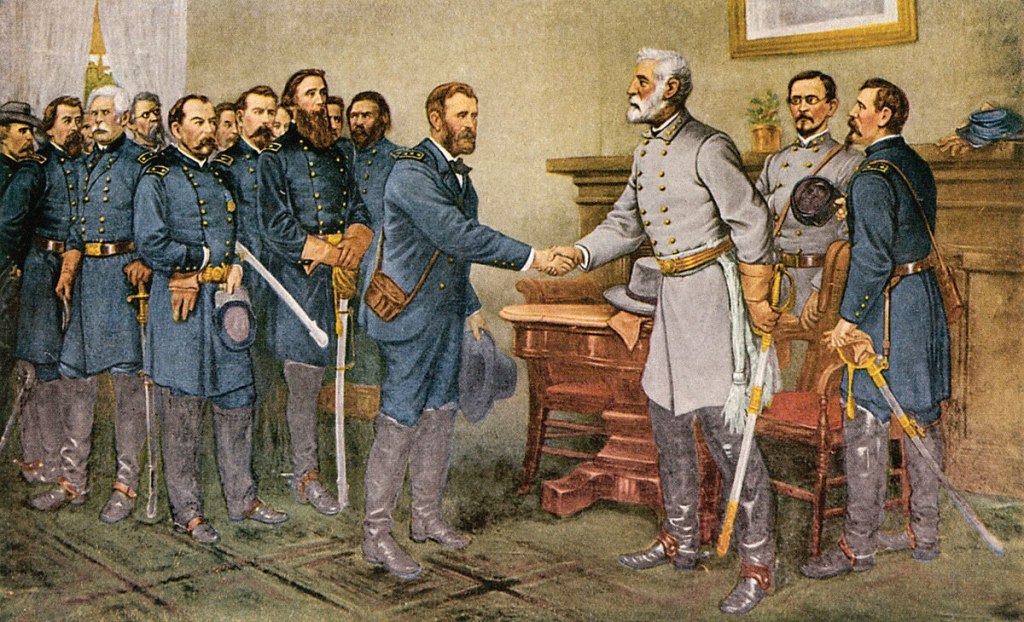
Empathy in Leadership: Grant and Lee’s Historic Meeting at Appomattox

During the final moments of the Civil War, after corresponding via letters to discuss terms, General Robert E. Lee met with General Ulysses S. Grant at the Appomattox Court House on April 9, 1865, to formally surrender the Army of Northern Virginia to the Union’s Army of the Potomac. Lee, proud and emotional, arrived in full confederate gray military regalia, while Grant, not expecting the meeting so soon, was dressed in a more modest, shabby used uniform with mud stains on his boots. This contrast between the two leaders visually reflected the two very different characters of the generals. Grant was widely recognized for his modest demeanor and unassuming appearance, to the extent that many soldiers in his own ranks often had difficulty identifying him as the commanding lieutenant general, given his lack of formality and polished attire.1 Before their meeting at Appomattox, the two had briefly crossed paths years ago during the Mexican-American War (1846-1848). Grant, then a junior officer, remembered the esteemed General Lee and mentioned their past encounter, though Lee did not recall their earlier meeting.*

Image 1: “Lee’s surrender 1865. ‘Peace in Union.’ The surrender of General Lee to General Grant at Appomattox Court House, Virginia, 9 April 1865. Reproduction of a painting by Thomas Nast, which was completed thirty years after the surrender.”2

After an extended period of cordial conversation, during which Grant later reflected in his memoirs on how agreeable their exchange had been—so much so that he nearly lost sight of the meeting’s true purpose—General Lee eventually redirected the discussion to the matter at hand, inquiring about the terms of surrender. With characteristic magnanimity, shaped by the many hardships he had faced in his own career, Grant astonished Lee by offering unexpectedly generous terms for the Confederate surrender. Rather than imposing harsh punishments, Grant allowed the soldiers of the army of Northern Virginia to return home unhindered. They were provided with Union rations, allowed to keep their personal arms, and given safe passage back to their homes to resume their civilian lives. There were no trials, no confiscations, no immediate retributions—just a pathway back to peace.

Continue reading

The Missing Puzzle Pieces

There is a vast range of electromagnetic wave frequencies dissipating aimlessly throughout the cosmos, including those that are not perceptible to us, transmitting energy across the frictionless vacuum of emptiness, space. Unpolarized waves emitted from the Sun, for instance, makes its way to Earth as visible light and thermal energy. The blue wave frequencies in the visible spectrum emitted from the Sun are most prone to scattering when they interact with atoms in the atmosphere due to their shorter wavelength*, hence the blue sky during the day1. Yet, our senses are limited. The human eye can perceive only a narrow portion of the electromagnetic spectrum, leaving us blind to microwaves, radio waves, alpha and gamma rays, and countless other forms of radiation. (Image 1)

Image 1: Set of electromagnetic spectrum diagram or radio waves spectrum or ultraviolet light diagram

Human sensory modalities—vision, audition, tactile perception, and olfaction—while robust, are inherently limited in their ability to fully grasp the complexities and phenomena of nature. Despite these innate limitations, astrophysicists attempt to bypass the constraints of our senses by seeking to unlock the mysteries of the universe through creativity based hypotheses and imaginative theories. They rely not solely on our biological God given senses, but rather, also, on our capabilities of imagination and formulation, which are rooted in the complex cognitive processes unique to humans, as far as we know today, though I must say Orca’s happen to be a commandable competitor to us with their advanced cognitive abilities**. This aspect of our nature is closely linked to the planning spirit discussed in my previous essay.2 Both, advanced endeavours of the self-conscious mind, which, fortunately, widens the gap between beast and man.

Continue reading