Tag Archives: faith

Day is Life

The free will to make decisions is one of the most vital aspects of the human condition. We are constantly confronted with the forks in life’s path that each choice presents: Should I postpone writing this essay for another day, or start now even though I don’t feel inspired? Should I eat that leftover Big Mac in the fridge, or take the time to cook myself a healthy meal? Most importantly, it is the consistent decisions made over time that shape enduring habits — the ones that determine the trajectory of a person’s life.

I have developed a mental tactic that I find useful for cultivating and protecting positive habits. It involves contemplating the fourth dimension — time — and the countless replicas of myself it continuously creates and discards. The “me” from an hour ago, a week ago, four years ago; the “me” two weeks or ten years into the future, or even tomorrow. Each represents a different self, frozen in either the past or the future. The essential difference between them lies in the fact that the future can still be thawed and reshaped, while the past remains permanently sealed — existing only in memory, serving as a reservoir of lessons.

A single day is the caricature parti diagram* of an entire life. If we think about it, life itself could be viewed as a single day replicated under varying external conditions — for as long as our genes and environment allow. By focusing on the nucleus of life — the day in repetition — we begin to realize that a fulfilling existence requires one to act as a comprehensive planner of the day1. The conscious and subconscious parts of the mind can only work in harmony when the former is able to program the latter through habit and repetition. Each day is like a blank canvas upon which one may craft the art of living through deliberate planning and structure. What this plan comprises of depends entirely on one’s personal pursuits — but the only essential rule is that it must not be squandered through idleness or indolence. One should be able to fully adapt to a plan — to write it down and follow it — yet remain flexible enough to revise it as time passes and one’s pursuits inevitably evolve. But the plan must always exist, lingering in the back of the mind, quietly enforcing progress as the unrelenting passage of time takes its course. This way, one does not reach the age of fifty with a sense of shock — “My God, how quickly it all went by; I hardly remember anything.” Instead, one should be able to say, “I’m fifty now — as expected. It’s no surprise. So far, I’ve done well. Now it’s time to plan the remainder carefully, so that my accomplishments and joys may deepen, and life may not feel as though it has been wasted.”
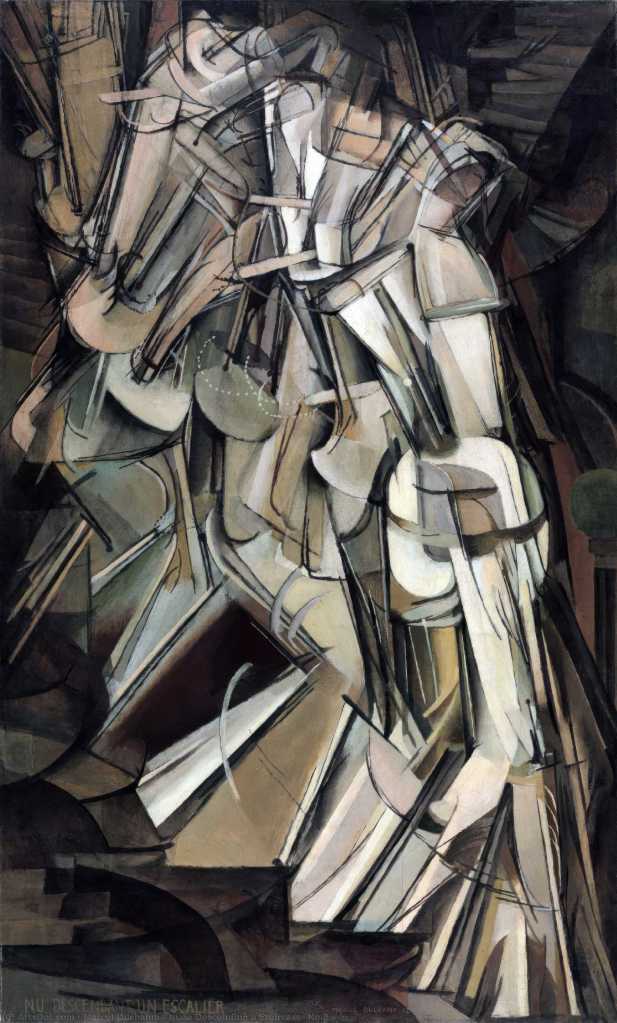
Nude Descending a Staircase, No.2 – by Marcel Duchamp, 1912, oil on canvas

I chose the painting above by Marcel Duchamp, which depicts a figure descending a staircase through time, rendered according to modern Cubist principles, with multiple replicas of the same figure in motion. Painted and exhibited in 1912, this style was innovative and drew significant media attention at the time. While I am not particularly drawn to the philosophy behind the painting, I see it as a symbolic representation of the theme of this essay. I believe that certain visual cues in the mind can serve as powerful guides, helping one remain focused when applying long-term effort and discipline.

Continue reading

Book Review: 12 Rules For Life, An Antidote to Chaos, by Jordan B. Peterson

First of all, in a way, this may sound as an odd comparison, but reading through this book, I found that Jordan Peterson’s writing style to bear a significant degree of resemblance to that of the renowned Russian author, Fyodor Dostoevsky. Both tend to employ a self-reflective, introspective dialogue in their works. However, unlike Dostoevsky’s often intricate and complex train of thought, Peterson’s approach is more direct and accessible, yet retains a similar depth of imagination.* A balance that I particularly appreciate. His 12 Rules for Life reads almost like a series of individual, self-contained mini-books, each of which could have been expanded further more in breadth if he had wanted. Peterson maintains a concise, focused narrative, ensuring that every sentence holds significance. In the final chapter, titled Coda, he skillfully ties together the preceding ideas, creating a structure that almost mirrors a well composed musical composition of the classics in my opinion.

Image 1: 12 Rules for Life by Jordan Peterson

It is particularly intriguing that Jordan Peterson simultaneously presents two seemingly contradictory worldviews on the subject of creation. On one hand, he references Darwinian principles, discussing how humans, like chimpanzees, are products of evolutionary processes. His extensive footnotes and bibliography, which include numerous works on research related to chimpanzees and other primates, clearly indicate his intent to draw distinct comparisons and analogies between human behavior and that of primates. This approach is particularly evident in his fifth chapter, where he discusses the importance of discipline and frequently references these studies to support his arguments. On the other hand, he advocates for the value of religious belief, particularly in God and Christianity, as beneficial, regardless of whether one perceives these beliefs as literal truths or metaphorical narratives. This juxtaposition raises compelling questions about the intersection of science and religion in understanding human existence. I appreciate this perspective, as the reality is that we do not yet fully know whether it is possible to dismiss religion as mere fiction or to regard science as a form of black magic. It is essential that we remain open to both possibilities, so as to avoid regretting a potential epiphany that our future selves might one day encounter. Frankly, I view Peterson’s ability to fully engage with two seemingly contradictory perspectives as a strong indicator of intellectual depth. By embracing both views with conviction and seeking to reconcile them within his own understanding, he demonstrates a commendable capacity for nuanced thought.

Continue reading

The Gulag Archipelago: Inner Radar

The Gulag Archipelago1 offers a personal and introspective account of the soviet gulag system as Solzhenitsyn reflects not only on his own experiences but also on the broader ideological framework that underpinned Stalin’s Soviet regime. In his book, he describes the systemic cruelty of the soviet prison systems (Gulags), examining the role of the “blue caps” — the Soviet officers who administered the brutal labor camps and interrogated prisoners at their headquorters2 — and the broader philosophy (or lack of a real philosophy?) that shaped their actions. He points out how the corrupt nature of a social system can tempt even honorable individuals to conform to it, bringing out their worst sides. And if not succumbed to the system, then unmercifully exiled or, in most cases, imprisoned. He argues that when a corrupt idealism and philosophy drive evil acts, people are often drawn further into darkness. Solzhenitsyn’s work probes into the dehumanizing effects of this system, illuminating both its individual and collective dimensions. According to him, one of the primary factors enabling such pervasive evil by the blue caps was the level of compliance of ordinary Russian citizens, who, without any resistance, passively obeyed, leading to their eventual interrogation and transfer to the Gulags on a massive scale.*

One theme that particularly resonated with me was his discussion of the “inner radar.” Through his interactions with new prisoners and observations of camp dynamics, Solzhenitsyn describes a nearly instinctual ability to identify possible informants and those with possible malicious intents by analyzing certain visual cues and body language, an intuition he learned to trust through time, as this skill was crucial for navigating such an environment.

Image 1: Book cover of The Gulag Archipelago by Alexandr Solzhenitsyn
Continue reading