Today’s self-development philosophies often encourage us to emulate people who are successful on the surface: those who are achieving, advancing, and seemingly on the “right” path in life. The advice is simple: listen to the successful, and avoid taking counsel from those who have failed in their business ventures or faced financial ruin due to wrong choices. However, I disagree. In reality, some of the most profound wisdom is often derived from those who have faced failure or adversity for long durations. These individuals have had the opportunity to reflect on their setbacks, examining the underlying causes and potential solutions they would employ if given the chance to rewind time. On the other hand, successful individuals—particularly those with innate talent—often achieve success without engaging in deep reflection about their journey. Usually, people tend to analyze their past actions with more scrutiny when the outcome was unfavorable. When success comes easily, the reasons behind it can also be as easily overlooked. However, when success is the result of perseverance and hard work during times of apparent failure, one gains a clear understanding of the incremental steps that lead to achievement.
During Vincent van Gogh’s time, most artists were preoccupied with creating idyllic natural landscapes, characterized by cheerful and harmonious compositions. Van Gogh, however, driven perhaps in part by his complex psychological state, gravitated toward capturing a grittier, more visceral essence of nature—raw, unrefined, and often less commercially appealing, as exemplified in his painting below of a pair of shoes. Vincent’s work was largely unappreciated during his lifetime. His brother Theo, who tirelessly supported him, struggled to sell his paintings due to their unconventional style and melancholy. Within his family, Vincent was often regarded as a failure, a perception that weighed heavily on his mind and fueled his relentless quest for purpose and recognition. Today, his paintings are celebrated worldwide, not only for their groundbreaking technique and emotional depth but also for the profound impact on the trajectory of modern art. What was once deemed unmarketable now holds immense cultural and monetary value, a testament to the timeless resonance of Van Gogh’s vision.1
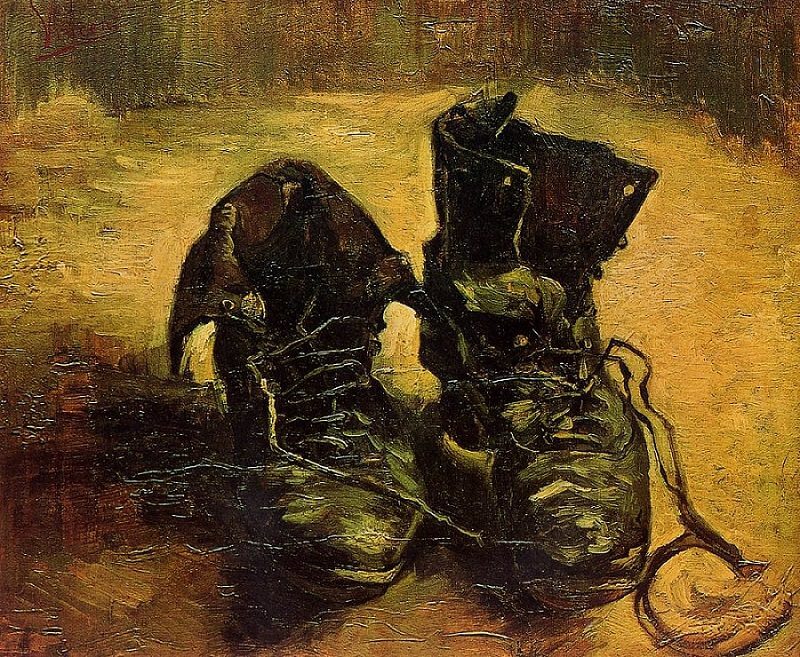
Success, by its very nature, is built on the foundation of repeated failures. A person may fail once, twice, or even nine times before finally succeeding on their tenth attempt. But what if the individual we regard as a “failure” is currently on his ninth attempt? Should his insights acquired from the past 8 attempts be disregarded entirely? I argue not. These individuals, though marked by their missteps, may possess valuable perspectives that can inform our own journeys. This is precisely why I struggle to accept society (or the free market) as the ultimate authority in determining who deserves to be celebrated as successful and who is dismissed as a failure. Society, after all, once dismissed a struggling artist like Vincent van Gogh as a failure. Perhaps if Vincent had lived longer and not succumbed to despair, he might have achieved a breakthrough in his lifetime as well, creating a work so profound it would have swayed even the most skeptical art connoisseurs of his generation. Tragically, he simply ran out of time, leaving the remnants of his genius to be recognized only posthumously.
Van Gogh’s case underscores the importance of establishing a correct mindset and building a strong sense of self-worth and unwavering belief in one’s own talents. The path to greatness is rarely straightforward, and more often than not, it is fraught with doubt, resistance, and discouragement—even from those closest to us. It’s a peculiar mystery of life: why do we, as a society, so often discourage our peers from succeeding? Is it envy, fear of change, or simply an inability to recognize potential when it doesn’t conform to familiar norms? I don’t have the answers, but it’s a poignant reminder of the resilience required to pursue one’s vision in the face of widespread discouraging doubt.
Continue reading Şahin Kaya Arıkoğlu