Advancing our “Being” Through Planning

Our cognitive abilities enable us to envision potential scenarios for the future based on past empirical experiences and our innate creative skills. The intellectual process of refining and synthesizing (distilling) imagined future scenarios into a single cohesive plan ready to be communicated through language or via image and chart based graphic methods is called planning. The subject of interest for this planning process is not confined only to the arts and sciences like architecture and urbanism, but is essential across a multitude of human endeavors. Whether this is about orchestrating a wedding, charting a career trajectory, preparing a presentation at work, outlining a military campaign, composing a musical piece on the piano, or developing an urban plan, the mental act of planning is a critical component of the human intellect.

To transition our Being1 from the remnants of chaos to a state of order and security, which is a condition that is prerequisite for future fulfillment and satisfaction, it is imperative that we cultivate a habitual approach to planning. Our minds must be conditioned to engage in daily strategic planning, with the flexibility to revise these plans in response to evolving circumstances. Rigidity in planning can be counterproductive; instead, adaptability is key. Without an active plan in hand, we risk remaining ensnared in the unpredictability of disorder and uncertainty, drifting from the dark and chaotic corners of the ocean of life, aimlessly.

The painting below, executed by Diego Velázquez2, was created during a period marked by a revival of interest in classical philosophy—a resurgence at that time, which also seems to be particularly relevant given the tumultuous events of recent decades.* This painting exemplifies Velázquez’s meticulous planning skills, evident in every detail. One can discern the strategic decisions embedded in his use of color, the juxtaposition of materials, the deliberate placement of Democritus’ left hand above the globe, hinting feelings of confidence and ownership, and the subtlety of his smile, bordering lunacy. Democritus was known for his cheerful disposition and propensity for laughter, his face in the painting is rendered with a nuanced portrayal that reflects his complex personality.

Image a
Democritus by Velásquez, 1628

Velázquez’s approach exemplifies a masterful orchestration of multiple smaller plans within the framework of a larger, overarching vision. Each element—color choice, material arrangement, and compositional detail—contributes to a cohesive thematic and visual narrative. Absent of such a comprehensive plan, Velázquez’s work might have devolved into mere artistic brushstrokes on canvas, showcasing skill and potential but lacking a focused, intentional message. Sounds Familiar?**

Continue reading
On The Sources of Principled Decision-Making and The Importance of having a Just Cause

Since I began immersing myself in the works of acclaimed authors, I have observed significant voluntary changes in my internal thought processes. When I read multiple works by a single author whose style resonates deeply with me, I notice that my inner dialogue occasionally adopts the tone and perspective of that author. Including his point of view when needed. This shift is particularly noticeable when I reflect on my own intentions and actions, as I find myself evaluating decisions through the lens of personal benefit (advantageousness1) and moral integrity (Duty2). If a plan does not meet my internal moral standards, I promptly discard it and continue on hypothesizing different scenarios with better moral outcomes to reach a plan3 decision that is close to perfect.

Moreover, As I assess my decisions, I often invoke the insights of the authors I have recently read. I ponder questions such as, “What would they have done in my situation?” For instance, I might contemplate how Emperor Marcus Aurelius would respond if faced with a selfish neighbor who obstructed his parking space. By imaginatively integrating the voices and perspectives of these authors into my decision-making process, I strive to make more thoughtful and principled choices in my life. Hence, this may be considered as an additional rationale for which I consistently advise my junior colleagues to curtail mindless television and social media consumption and, instead, immerse themselves in reading books at the earliest opportunity they get.

The mind, I’ve come to realize, is not governed by a singular voice. Instead, it is shaped by multiple perspectives, especially as we engage with more intellectually stimulating works. The ideas of strong-minded authors enhance our inner discussions, adding layers of critical thought and alternative opinions, which we can distill and sort out until arriving to the most favorable hypotheses. Consequently, our actions are persistently evaluated by these internal voices, underscoring the necessity of ensuring that justice and morality guide our endeavors.4 As a secondary effect, these newly internalized voices often assume the role of judges, scrutinizing our actions and, if they disapprove, withdrawing from us and shaming us, which can lead to feelings of guilt, affecting our neurological well-being. Therefore, it is crucial to be discerning about which authors and stories we choose to read. We must avoid incorporating toxic or weak perspectives into our internal dialogue by selecting authors whose works align with our values and contribute positively to our inner discourse.

Continue reading

Integration of Building and Landscape: Frederick Law Olmsted’s Approach

Grounds of the US Capitol, by Frederick Law Olmsted 18741

Successfully designing a formal, pastoral, scenic, or sublime landscape involves a complex synthesis of artistic vision and horticultural expertise. A landscape architect must possess an in-depth knowledge of tree and plant species suited to specific climates and regions, as well as advanced skills in composition making and spatial arrangement. Achieving mastery in this field requires extensive research, hands-on experience, and a deep, inquisitive intellect. Only through rigorous study, practical application, and innate creativity can one effectively conceptualize and realize a harmonious and aesthetically compelling landscape in the likes of what Frederick Law Olmsted and Andrew Jackson Downing accomplished.

The already intricate task of balancing the inherent chaos of nature with structured order is further complicated when the necessity of integrating a man-made structure, a building, into the landscape is required.2 This building, a completely man-made intervention on the site, must not only harmonize with its natural surroundings but also stand out as a focal point within its immediate context. The challenge here lies in ensuring that the landscape design both complements and enhances the hierarchical order, with the building at the most prominent point. To achieve this, effective collaboration is essential. Individual egos must be set aside in favor of teamwork and a collective commitment to the overarching vision.

Continue reading

A Proposal On The Revitalization of Gardening and Parks

The thesis of this essay is on why we should revitalize and prioritize parks, parkways, park systems and the activity of gardening in the planning of new towns or cities, urban or suburban. This can only be achieved through the implementation and enforcement of proper urban planning policies with the underlying goal of progress in civility and societal refinement in mind. Below is a detailed argument in support of this premise.

When one embarks on a long term journey of personal fitness, periodically lifting weights at the gym or running in an outdoor environment with discipline, many other aspects of his life starts to get indirectly effected. He is more likely to eat clean, stand up straight with a good posture, better maintain his personal appearance and hygiene, be more sociable and confident, be more healthy in the eyes of his doctors, sleep better and be more sociable during the day. Thus, it may be said that routine exercise is a pivotal activity which positively influences other facets in our lives. And, so is gardening not just about finding the energy to water long forgotten plants in our balconies, but if practiced with discipline and in the right setting, also a pivotal activity which paves the way towards developing many other important human virtues.

Continue reading

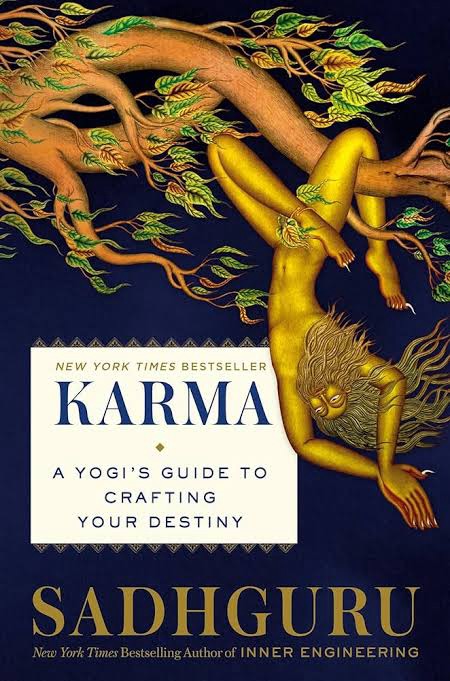
Book Review: Karma, by Sadhguru, 2021

Karma, Sadghuru

This book was gifted to me by a good friend of mine in Adana, Turkey, who is a devout follower of Sadhguru’s teachings.

Sadghuru divides his book into 3 parts, 1) On what is Karma 2) How to be aware of Karma and be on the drivers seat, 3) Queations about karma.

Below are some noteworthy excerpts from the book with my corresponding notes underneeth each quotation.

Continue reading

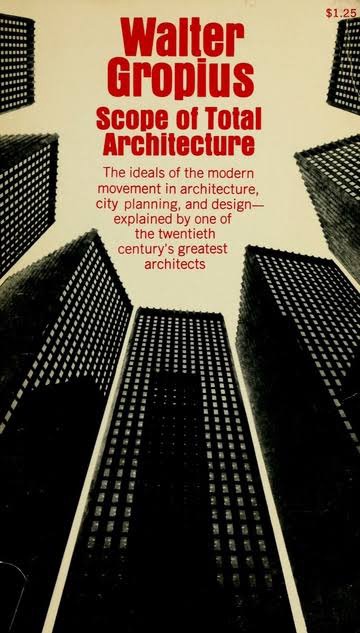
Book Review: Scope of Total Architecture. By Walter Gropius, 1955

Scope of Total Architecture

With its pragmatic architectural curriculum, as I was studying at the University of Maryland’s Architecture and Urban Design program (2006-2011), I have first heard about Walter Gropius and the Bauhaus movement from my mentors. Skimming through various picture books of Bauhaus products and buildings in the schools library, I ruled out using such precedents for my design projects due to its emphasis on the repetitive international/global style which I assumed it prioritized. However, as I read this book written by Gropius himself, to my surprise, my initial negative thoughts on the theoretical side of the Bauhaus formed during my studies were one by one proven wrong. It turns out that, Mr. Gropius, is in fact a region sensitive architect and writer who tends to be against an overarching omnipresent international style, and is, actually, quite displeased that his work had been interpreted by others as a international “style” in design.

After the Great war he took on to the daunting task of establishing the Bauhaus institution to engage context and circumstance appropriate meaning to the technological innovations in his field. His main aim being to utilize the apparently cold new industrial building technologies to serve a more humanist agenda through collaborative theoretical and craft/skill oriented design processes.

Continue reading

Elon Musk’s Unconventional Strategy: A Game-Like Approach to Business

To mitigate choice paralysis and indecisiveness in life’s important matters and business in general, should one adopt the habits of a serial risk-taker like Elon Musk?

A screenshot image from the game, Polytopia

A dedicated video game enthusiast since his adolescence, this billionaire entrepreneur is known to invest considerable time in the evenings playing games on his mobile device. Notably, he is reported to be highly engaged with a specific game, Polytopia, to the extent that it has occasionally led him to miss important meetings. He draws parallels between the game and real-life business practices, advocating for a willingness to embrace risk and view temporary failure as a necessary part of the journey. He maintains that while initial setbacks may be disheartening, they eventually pave the way for success, fostering greater courage in pursuing innovative business ventures. In essence, he suggests that managing a business should be approached with the same mindset as playing a video game—remaining resilient and not taking setbacks personally.1

Continue reading

On the Cilician Block

Pope Sixtus The Fifth

The proper question to ask would not be on how to quickly amend the disorganization and the level of common sense deviations confronting the city. That would not be possible. There would be no quick fix to the three-dimensional urban manifestations of such short term flawed thinking.  In the case of Rome, where the city was also confronted with a disorganized ununified city fabric, the visionary with power at the time, Pope Sixtus the Fifth, had set in motion a long term generational urban effort by the architects/artists and engineers of Rome to bring about a successful urban composition that has been proudly preserved as of today.

Continue reading

A Case For The Revival of Pure Forms in Architecture

Abstract: Through the discoveries made in astrophysics, it is safe to postulate that cosmic forces (gravity) exerted on mass prioritize on the long term establishment of equilibrium and purity. Our solar system is currently in its long term equilibrium phase, where planetary orbit takes place around the Sun and life flourishes on Earth. In Architecture, long term structural durability and aesthetic superiority may be achieved by implementing solids and voids that are designed with purity in mind. The geometric methods we may use for this deserves an entire separate paper or book on its own. The Roman architect Marcus Vitruvius Pollio has written extensively on these topics. However, in this essay, we will focus on the general argument for architectural purity. In times when liberated organic models of form dominate the avant-garde, it is appropriate and timely to present this alternative point of view.

The premise above will be disambiguated through worldly analogies, scientific observations and thought experiments presented in this paper.

An artistic illustration of Einstein’s theory of General Relativity, depicting a curved/bent fabric located in the space-time continuum under the influence of gravitational forces emitted by a perfectly spherical mass, causing long term orbital motion and equilibrium around stars and planets.

Continue reading