
Successfully designing a formal, pastoral, scenic, or sublime landscape involves a complex synthesis of artistic vision and horticultural expertise. A landscape architect must possess an in-depth knowledge of tree and plant species suited to specific climates and regions, as well as advanced skills in composition making and spatial arrangement. Achieving mastery in this field requires extensive research, hands-on experience, and a deep, inquisitive intellect. Only through rigorous study, practical application, and innate creativity can one effectively conceptualize and realize a harmonious and aesthetically compelling landscape in the likes of what Frederick Law Olmsted and Andrew Jackson Downing accomplished.
The already intricate task of balancing the inherent chaos of nature with structured order is further complicated when the necessity of integrating a man-made structure, a building, into the landscape is required.2 This building, a completely man-made intervention on the site, must not only harmonize with its natural surroundings but also stand out as a focal point within its immediate context. The challenge here lies in ensuring that the landscape design both complements and enhances the hierarchical order, with the building at the most prominent point. To achieve this, effective collaboration is essential. Individual egos must be set aside in favor of teamwork and a collective commitment to the overarching vision.
In the Capitol Grounds project, Frederick Law Olmsted chose to subordinate his landscape design to the prominence of the US Capitol building. As a visionary, he possessed the skill to dominate the landscape with his design; however, after careful analysis, he decided to take a more supportive role, enhancing the overall composition while allowing the Capitol to remain the focal point.3 Upon close examination of the drawing above, one can observe the meticulous arrangement of pathways. Certain carriage roads are intentionally lined with trees to create a corridor-like axial relationship with the building, guiding the visual sequence. For instance, the central axis is left open to provide unobstructed views of the dome for the public, while trees strategically placed further from the center partially obscure the view to create a deliberately designed progression toward the entrance. Additionally, Olmsted had to integrate the existing 21 streets connecting to the grounds into the landscape design, seamlessly blending these elements into the overall pattern-like composition. Upon careful examination of his design, it is evident that his primary objective is to ensure that the landscape complements rather than challenges the central concept of the Capitol building.
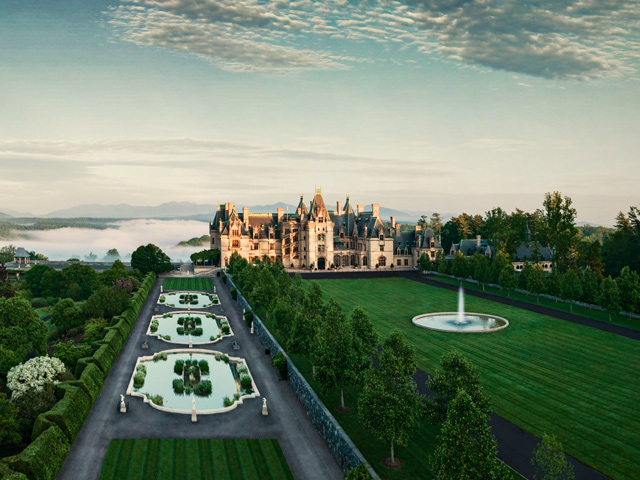
During his final years in the profession, Olmsted worked on the Biltmore Estate project, commissioned by George Washington Vanderbilt, the Commodore‘s grandson. This project is considered one of his finest achievements in landscape architecture. Situated on an 8,000-acre estate, the landscape design seamlessly integrates with the house, showcasing Olmsted’s mastery of various park and garden themes—pastoral, scenic, and formal. Near the mansion, he carefully avoided overwhelming the building’s formal architecture. Understanding the architect’s intentions, he designed large terraces and open lawns that are proportionate to the scale of the buildings on site. Unfortunately, his declining health worsened during the construction process, leading him to retire and pass the project to his son, Frederick Law Olmsted Jr.
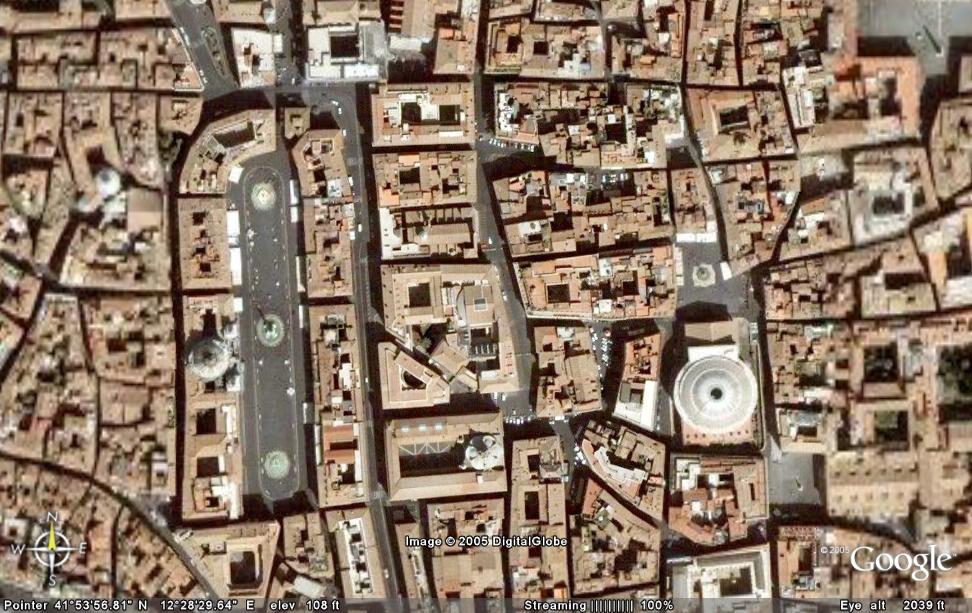
In many respects, it is fair to regard Olmsted as a knowledgeable urban designer and planner, despite not holding a formal title in these disciplines. His deliberate narrowing of meandering roads, flanked by trees and bushes, created vehicular corridors that led to the main green space in front of the house, thereby enhancing the architectural experience through a skillful urbanist’s approach of compression and relief. The spatial sequence leading to the Piazza Navona, in relation to its connecting roads, is analogous to the Biltmore Estate, where the winding road similarly guides visitors to the primary space in front of the mansion, reflecting a similar urban sequence.
However, Olmsted’s meticulous approach to context-sensitive landscape design appears increasingly absent in contemporary landscape architecture projects today. It seems that architects and landscape architects are now ensnared in an unproductive struggle for dominance between their disciplines. This is yet another instance where vanity supersedes virtue in modern life.4
During the design process, should a dispute arise between the landscape architect and the architect, what is the most effective resolution method? Should we rely on the client or fundraiser as an arbitrator, or should we engage in an extended exchange of ideas that may result in prolonged conflict? From a contextualist perspective, the architect should have final authority over decisions concerning the landscape design in the immediate vicinity of the building. The area of influence should not be determined on a fixed physical distance but in relationship to the building’s mass and its visual impact on the site. Additionally, if a unique program necessitates a specific approach sequence as proposed by the architect, the landscape architect should respect and adhere to it.
Ideally, the landscape architect and architect would collaborate effectively to develop a cohesive design concept to which both parties can adhere. However, in today’s often impersonal and fragmented professional environment, relying solely on the goodwill of the involved teams may prove unrealistic. Therefore, it would be prudent to establish a set of rules and guidelines—a design protocol—prior to initiating the collaboration to ensure alignment and facilitate a smoother design process.
Footnotes:
- “… The principle of subordination to the building will prevent the introduction in any part of the ground of local ornaments, whether in flowers, leaf-plants, or other objects simply curious or beautiful in themselves. … nor will any decoration be such as to hold the eye of an observer when in a position to take a general view of the Capitol. …” pg.159 Frederick Law Olmsted, Designing the American Landscape
- For Further research on the topic of chaos and order, I recommend the book “12 Rules for Life” by Jordan B. Peterson. In this book, although not entirely related to architecture or landscape architecture, one could extract finely distilled ideas on the contrast between the two opposing forces in life, chaos and order.
- “One of the most important lessons I extracted from composing music through many trials and errors was learning the importance of silence in critical parts of a composition. Art is not a cake where you can add more and more icing assuming that it will get better and better. This is especially relevant to architecture and urban design. There is a tipping point where the composition simply cannot take any more good ideas. The best is to have just one main big idea that is strong, and then to detail it well, without unnecessarily embellishing and anticipating the instances that need to be left blank. The presence of absence is important in parts of a composition, and it is a sign of mastery if used at the right place and at the right time.” This is an except from my essay on the Presence of Absence, published on 18.8.2016. It is particularly relevant in the case of Frederick Law Olmsted’s approach to the capitol Grounds and Biltmore Estate Project, where he purposefully plays on a low-key. https://sahinarikoglu.com/2016/08/18/the-presence-of-absence/
- I recommend reading the following book on ancient Stoicism as an introduction to such themes as virtue versus the passions. The Daily Stoic by Ryan Holiday

