Cities are not merely physical environments; they are cognitive environments. Just as artificial intelligence systems require significant energy to compute and process information, the human mind also depends on finite mental energy to think critically, formulate ideas, and solve complex problems. Human attention and cognitive capacity are limited resources.
When individuals move from one point to another within a poorly planned city, a substantial portion of this mental energy is unnecessarily consumed by basic survival and navigation based thinking. Chronic traffic congestion, unsafe roads, disorganized macaroni-like transportation systems, and inadequate pedestrian pathways force citizens into a constant state of alertness, which deplete vital cognitive energies. Instead of directing their attention toward productive thought, creativity, or innovation, people use up their cognitive quotas trying to avoid accidents, navigating chaos, and reacting to environmental stress.
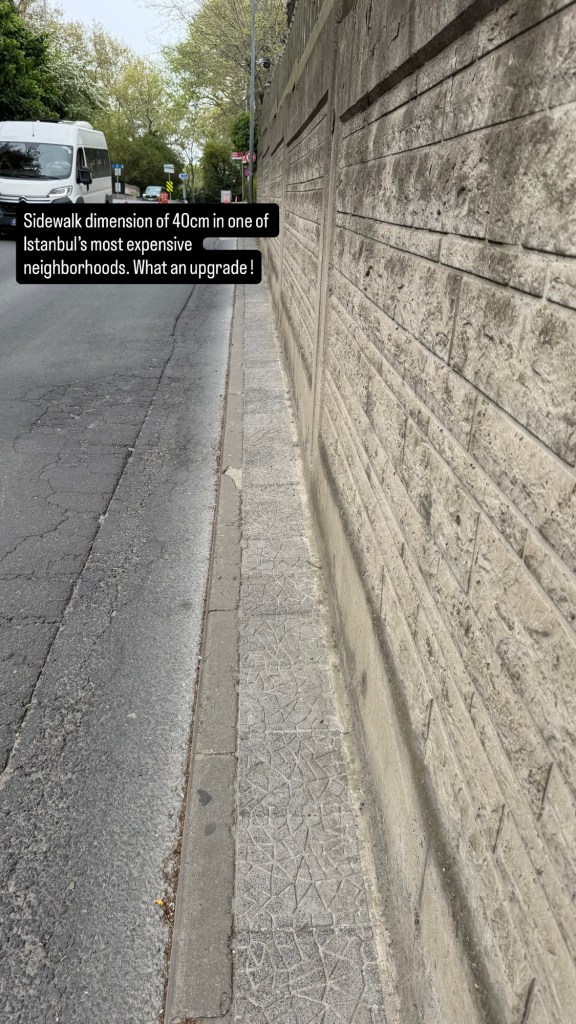
In this sense, poor urban planning quietly diminishes a nation’s intellectual and economic potential. A society in which daily commuting becomes mentally exhausting is a society that diverts valuable cognitive resources away from higher pursuits such as scientific development, artistic production, entrepreneurship, and philosophical thought. Pedestrians in poorly designed environments must remain continuously vigilant, often lacking safe and coherent pathways, which further contributes to cognitive fatigue. A person should be able to walk from home to work, or from home to the nearest park, without constantly checking behind them or wearing headphones to escape the noise of aggressive traffic. Cities should provide clear pedestrian pathways buffered from vehicular roads, with a distinct separation between spaces designed for people and those designed for automobiles.
Urban planning and design, therefore, should not be understood solely as a matter of infrastructure or aesthetics, but as an investment in the mental efficiency of a population. A well-designed city conserves human cognitive energy, allowing citizens to dedicate more of their intellectual capacity toward meaningful work, innovation, and the broader advancement of society.

